For cyanotype artists, reliable UV exposure is essential to achieve crisp blue prints with balanced detail. The following hand-picked UV lights and exposure units are tailored for cyanotype work and related screen-printing applications. This guide highlights five top options, their standout features, and practical considerations to help you choose the right lamp for your studio.
style=”display:none;”>Summary of Selected Products
| Product | Wavelength / Power | Best For | Notable Feature |
|---|---|---|---|
| Caydo 50W UV Exposure Unit | 395 nm, 50W | Cyanotype and screen printing | Adjustable stand; quick 3–5 minute exposure |
| UrekaGo 50W UV LED | 395 nm, 50W | Professional cyanotype and large-scale exposure | IP65 waterproof, wide coverage |
| Dorhui 50W LED Exposure Unit | 395 nm, 50W | Screen printing and cyanotype projects | 360° rotatable head; adjustable height |
| ANGOO 50W LED Exposure Unit | 395 nm, 50W | Screen printing plate making and cyanotypes | Foldable design; adjustable timing (1–999s) |
| Speedball 30W LED UV Exposure Lamp | 395–400 nm, 30W | Photo emulsion exposure for screens | 180° swivel mount; versatile placement |
Below are five product profiles, each offering clear exposure at cyanotype-friendly wavelengths, with practical features to fit different studio setups and project scales. Explore how each option aligns with your workflow, from compact desktop use to larger-format cyanotypes and screen-printing plates.
Caydo 50W UV Exposure Unit for Cyanotypes

The Caydo exposure lamp delivers a 395 nm wavelength with a 50W output, designed to provide uniform illumination for cyanotype emulsions. Its compact dimensions (approximately 13 cm by 23.5 cm) help fit a range of workspaces, and exposure times typically fall in the 3–5 minute window depending on emulsion thickness. A straightforward ON/OFF switch enables quick operation, and the adjustable lamp holder supports various angles and heights to optimize the exposure of different plate sizes or fabrics. This unit’s design emphasizes ease of use and efficient curing for consistent cyanotype results.
Key considerations for Caydo include evaluating your typical exposure area, since uniform coverage matters for even blue tones. If you frequently shoot on larger plates or textiles, you may prefer a model with broader light coverage or a larger head. The included installation guidance simplifies setup for beginners and seasoned practitioners alike. Durability and heat management are standard expectations for 50W UV lamps, ensuring stable exposure across multiple sessions.
UrekaGo 50W UV LED for Cyanotype & Screen Printing

The UrekaGo unit provides 395 nm UV light with a 50W LED array and 50 LEDs for robust exposure. It emphasizes professional-grade results, with claims of fast exposure times while delivering high-quality cyanotype and screen-printing outcomes. The design includes a die-cast aluminum housing for efficient heat dissipation and long life, plus an IP65 waterproof rating that supports use in varied environments, including outdoor settings. The product positioning targets artists seeking reliable, durable performance and consistent blue tones in cyanotypes.
When considering UrekaGo, assess your need for environmental resilience. The IP65 rating helps if you work in spaces where humidity or occasional splashes are a concern. A strong heat management system reduces risk of gradual light output degradation, preserving exposure consistency across sessions. If you run back-to-back cyanotype sessions, the longevity and steady output of this unit are appealing.
Dorhui 50W LED Exposure Unit for Screen Printing

The Dorhui unit shares a 395 nm, 50W specification with a focus on even uniform illumination and faster curing for photosensitive emulsions. A standout feature is the adjustable height and 360° rotatable lamp head, enabling precise targeting of larger plates or uneven surfaces. The lamp’s head distance can range from 1″ to 20″, offering flexibility for different emulsion thicknesses and substrate types. With its wide projection and adjustable geometry, this model aims to minimize dark corners and ensure uniform exposure across the plate.
Consider Dorhui if your workflow includes larger or multi-piece cyanotype assemblies. The adjustable distance and rotation help tailor exposure to varied textures, from fabric to heavy-weight papers. As with similar 50W units, monitor exposure times to avoid overexposure, especially with delicate emulsions. This model is well suited to mixed-use studios that blend cyanotype with screen-printing plate-making.
Waklyte 21-LED UV Flashlight for Transportable Uses
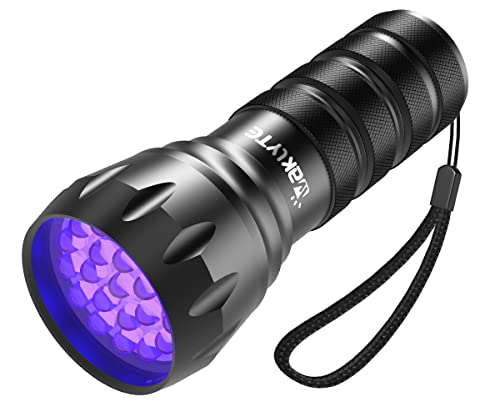
While not a traditional fixed exposure unit, the Waklyte UV flashlight uses 21 LEDs at 395 nm to support small-scale UV work, such as quick checks or spot-cures in resin projects and resin-based cyanotypes. Its portability makes it suitable as a supplementary tool for session verification, spot-checking emulsion areas, or for field applications where a full exposure unit isn’t practical. The high-UV intensity per LED helps deliver rapid results in targeted areas, though coverage is limited compared to larger exposure panels.
For users evaluating mobile workflow options, it’s important to pair a small flashlight with a larger fixed exposure source to balance convenience with consistent overall exposure. The Waklyte model is best used as a complement to a primary 50W UV exposure solution, enabling quick checks or on-the-go cyanotype experiments in classrooms or studios.
ANGOO Foldable 50W Exposure Unit

The ANGOO unit emphasizes a foldable design for easy storage and transport, making it convenient for studios with limited space or artists who move between locations. It uses a 50W UV LED with a 395 nm wavelength and includes a timer that can be set from 1 to 999 seconds to tailor exposure precisely. The setup is straightforward—no assembly required—and the height and angle can be adjusted to optimize exposure for cyanotype emulsions or screen-printing plates. The combination of portability and precise timing supports flexible workflows.
ANGOO’s foldable approach suits makers who prioritize space efficiency or who teach cyanotype workshops in multiple rooms. Exposure times of 5–15 minutes are typical for 50W units, depending on emulsion thickness, so users should calibrate their process to achieve repeatable results. The timer and adjustable geometry help in maintaining consistent outcomes across sessions.
Resiners UV Light for Resin Curing

This 3-in-1 USB-rechargeable UV lamp is designed for resin curing but also supports cyanotype-related curing tasks. It features a foldable design, dual adjustable stands, a 320–420 nm range, and USB charging for wireless use up to about 4 hours on a full charge. The 22 UV beads provide extensive UV output for efficient curing in a smaller footprint. For cyanotype, this device is a compact accessory for on-demand curing or rapid finishing of resin-based cyanotype components, jewelry, or small fabric samples where a portable light is advantageous.
When selecting a resin-focused UV option, consider how often you need mobile use versus fixed, bench-based exposure. The Resiners lamp is best as a supplemental tool to a main exposure setup, offering flexibility for quick touch-ups, experiments, or on-site demonstrations without tethering to a power outlet.
Buying Guide: Key Purchase Considerations for Cyanotype UV Lights
- Wavelength and power: For cyanotypes, a 395 nm (near-UV) wavelength is standard because it interacts well with the traditional cyanotype chemistry. A 50W LED setup often provides reliable, even exposure for small to medium plates, while larger formats may benefit from higher output or broader coverage.
- Light coverage and uniformity: Look for a lamp head with a wide projection angle and even light distribution to avoid “hot spots” that can affect blue tones. Adjustable angle and height help match the scene to various plate sizes and fabrics.
- Ease of use and setup: Features like adjustable stands, foldable designs, and clear timing controls reduce workflow friction. Quick-start switches and straightforward assembly are valuable for beginners and busy studios.
- Durability and heat management: Durable housings and effective heat dissipation extend lamp life and maintain consistent output over time, especially during longer exposure sessions.
- Environment and portability: IP-rated or weather-resistant units are beneficial for outdoor work or classrooms. Portable options complement fixed exposures, enabling on-the-go cyanotype testing or education settings.
- Compatibility with emulsion types: Ensure the UV light supports the exposure emulsions and any additional materials used in your cyanotype workflow, including fabrics and textiles when producing fabric-based cyanotypes.
- Maintenance and replacement: LEDs offer long lifespans, but check for availability of replacement parts or heads, especially if you work in a high-volume studio.
In choosing a solution, balance your typical project scale with workspace constraints. Fixed 50W units provide stable, repeatable exposure for classic cyanotypes and screen-printing plates, while foldable or portable options help with storage and mobility. Using a primary exposure lamp complemented by a portable UV tool can streamline workflows in teaching environments or field projects without compromising print quality.