What’s in this guide
Choosing the right surface for rolling dough can improve texture, reduce sticking, and speed up kitchen workflows. This guide highlights top silicone pastry mats that provide generous work spaces, durable surfaces, and reliable non-stick performance. Each option below is designed to handle bread, cookies, pie crusts, fondant, and more, making them ideal for home bakers and hobby chefs alike.
| Product | Size | Brand | Notes |
|---|---|---|---|
| QUELLANCE Silicone Baking Pastry Dough Mat | 20″ x 28″ | QUELLANCE | 0.7mm thick, durable, non-stick |
| Folksy Super Kitchen Non-slip Mat (Red) | 28″ x 20″ | Folksy Super Kitchen | Premium silicone, non-stick surface |
| Folksy Super Kitchen Non-slip Mat (Blue) | 28″ x 20″ | Folksy Super Kitchen | Thick, stable, easy clean |
| EuChoiz Silicone Pastry Mat | 24″ x 16″ | EuChoiz | Edge heightening, durable |
| XXL Silicone Pastry Mat | 31.5″ x 23.5″ | KPKitchen | Large surface with conversion charts |
QUELLANCE Silicone Baking Mat 28×20

Premium Silicone Bakig Mat: Made from 100% food-grade silicone. The 0.7mm thickness provides durability for daily kneading, rolling dough, and shaping fondant without warping. The surface remains non-stick, making cleanup simple and quick.
Folksy Super Kitchen Red Non-slip Mat 28×20
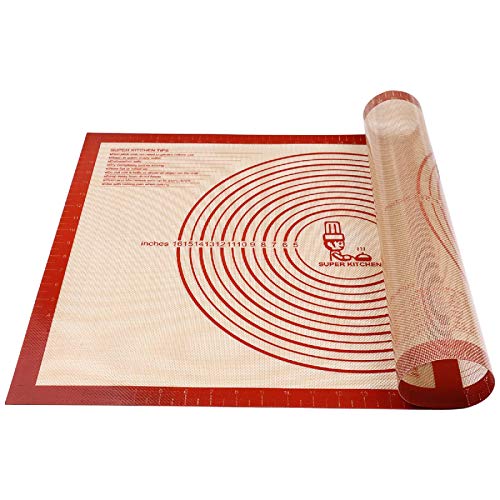
Non-stick Mat With Thick Design: The mat is 0.7mm thick, offering extra durability and stability on the table. It features a premium food-grade silicone surface that’s easy to wipe clean, and its non-stick quality helps dough glide smoothly while rolling.
Folksy Blue Non-slip Mat 28×20
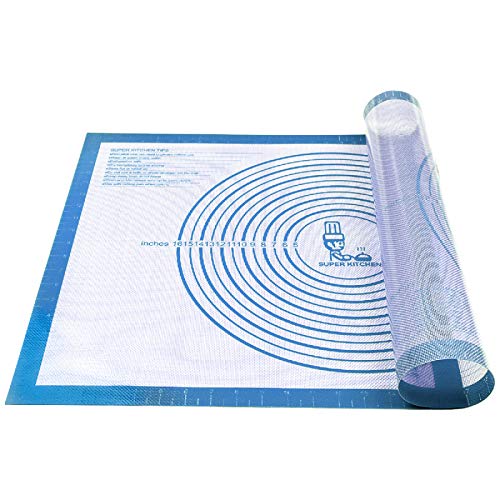
Premium Safe Silicone: Health-conscious, food-grade silicone protects your kitchen. Its non-stick surface reduces flour requirements, and the mat cleans easily with a damp cloth. The 0.7mm thickness helps prevent wrinkling during use and increases durability.
volikos Silicone Baking Mat 24×16

Extra Thick 1.1mm Surface: Food-grade silicone with a non-stick finish, designed to resist staining and warping. It includes side holes for hanging and storage, and is easy to clean by hand or in the dishwasher.
ULTRAKENO 32×24 Inch Mat

Extra Thick, Edge Heightening: The mat uses 2.0mm thick silicone with a 5mm raised edge. This design minimizes spillover and keeps countertops clean while staying flexible enough for easy rolling and kneading.
Buying Guide
- Material quality: Look for 100% food-grade silicone that is BPA-free and resistant to staining, odor, and discoloration for long-term use.
- Thickness: Mats commonly range from 0.7mm to 2.0mm. Thicker mats (0.7mm and above) are more durable and less prone to wrinkling, especially on rough work surfaces.
- Edge design and height: Raised edges help contain flour, dough, and liquids, keeping your workspace cleaner and reducing mess.
- Size and work area: Choose a size that fits your counter space and typical dough sizes. Larger mats provide more room for big batches or rolling out pizza dough.
- Non-slip capability: A non-slip base prevents sliding during rolling, improving control and reducing accidents.
- Ease of cleaning and storage: Mats that are dishwasher-safe or easy to wipe down save time. Side holes or rolls enable convenient storage.
- Versatility: Consider mats with measurement markings, conversion charts, or both to assist with recipe accuracy and scaling.
- Care instructions: Some mats require removing a protective film before first use or avoiding sharp utensils that could scratch the surface.
- Budget vs. durability: Higher-thickness mats may be pricier but often last longer under heavy use, making them cost-effective in the long run.
- Item variety: If you bake a range of items (bread, pie crust, fondant), a larger mat with clear measurements can reduce the number of mats you need.
The market offers a spectrum of silicone pastry mats that balance size, thickness, and ease of use. For home bakers rolling large dough sheets or fondant, a big, thick, non-stick surface with a stable, non-slip base tends to perform best. For those with compact kitchens, smaller 20×28 inch mats still deliver ample space while staying portable. When evaluating options, consider how you typically bake, storage constraints, and how often you clean your workspace to choose the mat that best fits your routine.