Choosing a sewing machine that handles heavy fabrics with ease requires a robust motor, a solid frame, and reliable stitching across multiple layers. The following selections are well-suited for denim, canvas, leather, and other dense textiles. Each model below is evaluated for piercing power, stitch variety, durability, and user-friendliness to help American crafters find a dependable workhorse for demanding projects.
| Product | Brand | Key Strengths | Stitch Range |
|---|---|---|---|
| SINGER Heavy Duty 4452 | SINGER | Strong motor, clear view bobbin, LED lighting | 110 stitches |
| SINGER Heavy Duty 4423 | SINGER | Automatic needle threader, high-speed | 97 stitches |
| SINGER Heavy Duty 6620C | SINGER | LCD screen, 215 stitches, durable frame | 215 stitches |
| Brother XM2701 | Brother | Lightweight, 27 stitches, auto needle threader | 27 stitches |
| SINGER Heavy Duty 6700C | SINGER | 411 stitches, LCD display, robust motor | 411 stitches |
The list below focuses on machines known to perform well with heavy fabrics, balancing motor power, frame rigidity, and stitch versatility. Each entry includes a direct link to Amazon for quick comparison and purchasing, along with visual references and key features that influence performance on thick materials.
SINGER Heavy Duty 4452: High Power For Dense Materials

The SINGER 4452 combines a stronger motor with a full-metal frame to maintain consistent stitching through layers of denim and canvas. It offers 110 stitch applications, including basic, stretch, and decorative options, plus a one-step buttonhole for efficient garment construction. A clear view bobbin cover helps monitor thread usage at a glance, reducing interruptions during long sewing sessions. The LED lighting enhances visibility on thick seams, making it easier to guide fabric as layers accumulate.
SINGER Heavy Duty 500 Classic: Vintage Feel, Modern Power

The HD500 Classic blends a vintage-inspired design with measurable strength, delivering 50% more power than standard models. This machine is well-suited for heavy fabrics such as denim and leather, thanks to a robust motor and reliable piercing power. It includes convenient features like a built-in needle threader and a one-step buttonhole, plus adjustable stitch settings for length and width. The drop-feed capability supports free-motion work, while the overall construction emphasizes durability for long-term use in busy sewing spaces.
SINGER Heavy Duty 4423: High-Speed Through Thick Seams

The 4423 stands out with a powerful motor capable of high-speed sewing up to 1,100 stitches per minute, which helps complete projects quickly when dealing with dense fabrics. It features an automatic needle threader and a 60% stronger motor for improved piercing power on multiple layers. With 97 stitch applications, sewers can tackle a wide range of tasks from basic seams to decorative stitching, all while maintaining thread integrity in thick fabrics.
SINGER Heavy Duty 6620C Computerized: Studio-Grade Capacity

The 6620C offers a broader creative horizon with 215 stitch applications and an LCD screen for easy navigation. Its heavy-duty construction includes a durable metal frame and robust motor, delivering up to 1100 stitches per minute. This model is particularly effective for users who blend garment making with home décor projects, offering precise stitch control across thick textiles. The included accessories enhance versatility, ensuring compatibility with diverse sewing techniques.
SINGER Heavy Duty 6700C: Extreme Stitch Variety
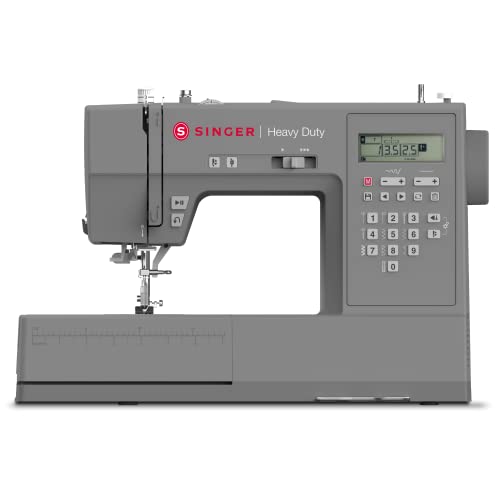
The HD6700C stands out with 411 stitch applications, making it a top pick for sophisticated projects that involve lettering, monogramming, or elaborate decorative work on heavy fabrics. The machine’s enhanced piercing power supports multi-layer materials, from thick denim to heavy quilting. A full-metal frame ensures stability during fast stitching, while the LCD screen simplifies selecting stitches and adjusting settings for consistent results across dense textiles.
SINGER Heavy Duty 4411: Versatility And Power

The 4411 is designed for heavy fabrics with a motor delivering 50% more power than standard models. It offers 69 stitch applications, providing a versatile range of options for both heavy and lighter fabrics. A high-speed performance of up to 1,100 stitches per minute accelerates production, making it a reliable choice for repairs, home décor, and durable garments, while maintaining stitch quality on dense materials.
Buying Guide: Key Purchase Considerations
When selecting a sewing machine for heavy fabrics, consider the following factors to ensure long-term satisfaction and project success.
- Motor Power: Look for a strong motor (often labeled as “heavy duty” or with higher wattage) to sustain performance through multiple layers.
- Frame Material: A full-metal frame provides stability and reduces vibration when sewing thick seams.
- Piercing Power: Machines with enhanced piercing power will more easily penetrate dense materials without skipped stitches.
- Stitch Options: A broader range of stitches, including utility, decorative, and buttonholes, supports versatile projects common with heavy fabrics.
- Speed Control: A high maximum speed is beneficial, but ensure you can regulate speed for precise control on dense textiles.
- Maintenance Features: Automatic needle threader, jam-resistant bobbins, and easy thread path design save time during long sessions.
- Accessory Availability: Additional feet and accessories expand capabilities for heavy fabrics (e.g., walking feet, zipper feet).
- Ease Of Use: Ease of threading, bobbin winding, and intuitive stitch selection reduces fatigue during demanding projects.
- Warranty And Support: A solid warranty and accessible customer support help address issues with hard-wearing machines.
For buyers prioritizing maximum stitch variety, models like the 6700C provide extensive options with a modern display, while the 4452 and 4423 emphasize speed and piercing power for dense layers. If portability matters, consider lighter models with essential heavy-duty features, keeping in mind that a sturdy build often correlates with better performance on thick fabrics. Always review user feedback and test stitching on your typical heavy materials to confirm compatibility with your projects.