Leather crafting often demands robust, precise tools that can handle multiple layers and tough materials. This guide highlights five top rotary cutters suitable for leather projects, ranging from light leather scraps to thick hides. Each option emphasizes blade durability, ergonomic handling, and safety features to support clean, accurate cuts. Explore products designed for both hobbyists and professional leatherworkers, with insights to help you choose the best fit for your needs.
Summary Of Chosen Products:
| Product | Brand | Key Benefit | Blade Size |
|---|---|---|---|
| Fiskars 60mm Rotary Cutter for Fabric | Fiskars | Heavy-duty, titanium-coated blade for thick materials | 60mm |
| Olfa Standard Rotary Cutter 60mm | OLFA | Balanced, safety blade cover, ambidextrous use | 60mm |
| Fiskars 45mm Rotary Cutter for Fabric | Fiskars | Precise cuts with versatile 45mm blade | 45mm |
| Fiskars 45mm Rotary Cutter with Safety and Left/Right Use | Fiskars | Ergonomic design with easy blade change | 45mm |
| Headley Tools 45mm Cutter | Headley Tools | Durable SKS7 blade, left/right compatibility | 45mm |
Fiskars 60mm Rotary Cutter for Thick Leather Projects

The Fiskars 60mm Rotary Cutter for Fabric is built for versatility and durability, with a titanium-coated blade designed for thicker materials. Its precision-ground blade supports accurate cuts through multiple layers, making it suitable for leather scraps and layered leather projects. The cutter uses an ergonomic loop grip and a comfort handle to minimize fatigue during longer sessions, while being compatible with common cutting mats to protect work surfaces. The blade’s longevity is enhanced by its titanium coating, which is three times harder than standard steel.
Key features include a secure blade change system and a spent blade lock mechanism, contributing to safer operation in leather crafting contexts where frequent material changes occur. This cutter pairs well with an appropriate self-healing cutting mat for smooth, clean edges. While designed for fabric, the robust blade and comfortable grip translate well to leather tasks, especially when careful handling is required for thick layers.
Olfa Standard 60mm Rotary Cutter
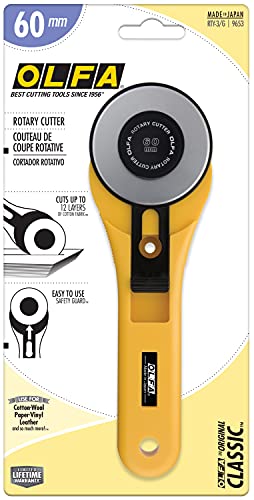
The Olfa Standard Rotary Cutter 60mm delivers a simple, reliable cutting experience with a straight, durable handle and a safety blade cover. Designed for both right- and left-handed users, this cutter offers balanced control for leather perforations, pattern tracing, and clean straight cuts. The 60mm blade size is well-suited for medium-thickness leather pieces, while the included blade guard reduces the risk of accidental cuts during storage or setup. It’s a solid option for leather hobbyists who value simplicity and consistent results.
With its focus on safety and ease of use, this cutter is well-matched to leather projects that require repeated passes or re-trims. For best results, pair with a sturdy cutting mat and practice controlled passes to avoid undercutting edges or creating frayed seams on leather pieces.
Fiskars 45mm Rotary Cutter for Fine Leather Details

The Fiskars 45mm Rotary Cutter provides precision suited for leather detail work and small pattern cuts. Its versatile blade is designed to cut multiple layers with clean edges, making it appropriate for leather pieces that require precise, narrow cuts. The cutter promotes enduring sharpness and can be paired with a Fiskars Self-Healing Cutting Mat to protect work surfaces. Its lightweight, balanced feel helps maintain accuracy over extended cutting sessions, which is valuable for detailed leather crafting like belts, straps, or small leather components.
While primarily marketed for fabric, the 45mm blade size offers a good balance of control and speed for leather projects that demand tight, accurate lines. For leather enthusiasts, this tool supports delicate trimming and finishing tasks, especially when combined with careful technique and proper pressure control.
45mm Rotary Cutter With Extra Blades And Safety

The Headley Tools 45mm Cutter adds an ergonomic, safety-first design with a locking blade feature. It is designed for left- and right-handed users and ships with extra blades, making it a practical option for leather projects that involve frequent blade changes. The blade is described as sharp and durable, suitable for cutting multiple layers of fabric, paper, mesh, felt, and vinyl—suggesting applicability to thin leather pieces and trim work as well. Its safety button and blade-folding mechanism contribute to safer operation in busy or classroom environments.
For leatherwork, this cutter offers a controllable option when precision is essential. The dual-side blade capability and secure safety lock help reduce the risk of slips, which is valuable when working near seam lines or curved edges on leather goods.
OLFA Rotary Cutter RTY-2/G

OLFA’s RTY-2/G Rotary Cutter is a versatile, ambidextrous option designed for light to medium leather tasks. It emphasizes ease of use and reduced cutting effort, which can help in leather projects requiring repeated passes or trimmed edges. The left/right-hand compatibility supports a comfortable grip for both dominant hands and can contribute to consistent cuts on leather pieces with curves or angles. As with other manual cutters, optimal results come from using a sharp blade and a stable cutting mat to ensure clean lines.
This cutter is a practical choice for hobbyists who value a straightforward tool with dependable performance. For leather crafting, ensure you select a blade designed for heavier cutting if your leather stock is thicker or more resistant, and consider blade maintenance to preserve edge quality over time.
CGOLDENWALL Electric Rotary Cutter For Leather And Fabric

The CGOLDENWALL Electric Rotary Fabric Cutter delivers high-speed cutting with a 70mm octagonal blade and 2400 RPM, capable of handling multi-layer materials up to 25mm thick, including leather. This utility cutter is designed for rapid, straight and curved cuts, making it suitable for larger leather pieces or shop environments where speed is essential. It is intended for industrial or heavy-duty use rather than delicate handwork, and it recommends sharpening the built-in stone prior to operation. While not a conventional hand tool, it offers a powerful option for leather production lines or bulk trimming tasks.
Note that it is not recommended for cardboard or particularly fluffy materials. For leather tasks, ensure proper safety measures, such as blade guards and protective gear, given the power and potential kickback. This tool excels in guiding long, clean cuts through multiple leather layers when accuracy and speed are priorities in a workshop setting.
Buying Guide: Key Considerations For Leather Cutting
- Blade size and material: Larger blades (60mm) cut more material per pass and can handle thicker leather edges, while 45mm blades offer precision for finer work. Titanium coatings improve blade durability and edge longevity for tough leathers.
- Ergonomics and safety: Look for comfort grips, anti-slip handles, safety guards, and blade-lock mechanisms to reduce fatigue and prevent accidental cuts during extended sessions or in busy workspaces.
- Cut depth and material compatibility: For leather, ensure the device can handle multiple layers and the expected thickness. Electric cutters provide speed for bulk work but require training and safety protocols.
- Ambidextrous design: Tools that work well for both right- and left-handed users enhance control and reduce fatigue when following curved or intricate leather patterns.
- Safety accessories and mats: A sturdy self-healing cutting mat and secure blade storage contribute to cleaner edges and longer tool life in leather projects.
- Maintenance and blades: Consider availability of replacement blades and ease of blade changes. Durable steel or titanium-coated blades maintain sharpness through repeated leather passes.
- Intended use: Manual cutters excel for detailed, hands-on leather work, while electric cutters suit industrial settings with high-volume trimming requirements.
When selecting a rotary cutter for leather, balance precision, safety, and durability against your typical project size and material thickness. For hobbyists focusing on small leather pieces or detailed work, a 45–60mm cutter with a secure grip and reliable blade performance is usually ideal. For production settings involving multiple layers or thicker hides, an electric cutter can offer efficiency, provided proper training and safety protocols are in place.