What’s in this guide
- Summary Table Of Chosen Products
- Lima Bean Seeds For Planting – Henderson Butter Bean Seeds
- Learning Resources Giant Magnetic Plant Life Cycle
- WILD ENVIRONMENTAL SCIENCE Mars Landing Survival Kit
- Super Absorbent Polymer Sodium Polyacrylate 1 Pound
- 96 Pcs Science Fair Board Supplies
- Buying Guide
- Key Considerations
- Comparison At A Glance
Selecting the right plant-focused components can elevate a science fair project from good to exceptional. This article highlights five thoughtful products that support plant growth experiments, life-cycle demonstrations, and engaging displays. Each pick offers hands-on learning value, clear instructions, and materials conducive to classroom or home experiments. Read on to compare what each product brings to your plant science project and find the best fit for your goals.
Summary Table Of Chosen Products
| Product | Brand | Ideal For |
|---|---|---|
| Lima Bean Seeds For Planting | SURVIVAL GARDEN SEEDS | Classroom plant life cycles and germination experiments |
| Learning Resources Giant Magnetic Plant Life Cycle | Learning Resources | Visualizing plant growth stages on whiteboard |
| WILD ENVIRONMENTAL SCIENCE Mars Landing Survival Kit | WILD! Science | Mars habitat concepts and plant-based ecosystems |
| Super Absorbent Polymer Sodium Polyacrylate 1 Pound | Science Gone Fun | Soil moisture and plant hydration demonstrations |
| 96 Pcs Science Fair Board Supplies | Dispowreath | Professional display and project organization |
These products collectively cover seed germination, plant life cycles, ecological simulations, moisture management, and polished presentation—key facets of successful plant-themed science fair projects.
Lima Bean Seeds For Planting – Henderson Butter Bean Seeds

The Lima Bean Seeds are positioned for classroom science projects focusing on germination and early plant growth. Each packet provides straightforward instructions suitable for students learning plant life cycles, making them a reliable starting point for experiments that track sprouting times, growth rates, and yield expectations. The seeds typically demonstrate quick germination, enabling timely data collection within a standard project timeline. This product is particularly useful for projects that compare germination under varying light, temperature, or moisture conditions, providing tangible observations for a data-driven display.
Key features to note include easy-to-follow germination instructions, clearly labeled seed packets, and suitability for both classroom use and home experimentation. When planning a plant science fair entry, consider pairing these beans with a simple moisture or soil quality test to build a robust, repeatable experiment that yields compelling results for judges.
Learning Resources Giant Magnetic Plant Life Cycle

This product offers a tangible way to teach and explore the plant life cycle. The oversized magnets allow students to demonstrate stages from seed to mature plant on a whiteboard, making the abstract process concrete. It supports visual learners and group demonstrations, helping students compare growth timelines and life-cycle stages side by side. For science fair use, teams can present a bean or pea life cycle model, link it to photos or data charts, and discuss environmental influences on each stage.
The magnets are designed to be durable and reusable, with clear labeling for each life stage. Teachers and students can easily rotate scenarios to illustrate germination, flowering, pollination, and seed dispersal. The visual, kinesthetic approach complements written lab reports and enhances the storytelling aspect of a science fair exhibit.
WILD ENVIRONMENTAL SCIENCE Mars Landing Survival Kit
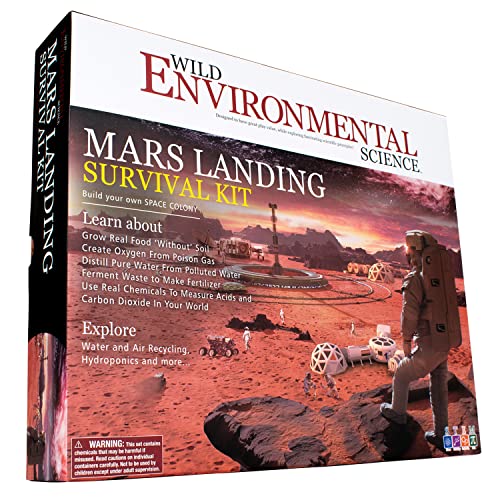
This kit introduces students to the concept of building a self-sustaining ecosystem in a controlled environment, akin to growing plants on Mars. It’s valuable for plant-focused projects that explore how plants could function in extreme habitats, with hands-on activities such as cultivating Martian soil analogs and observing plant growth under simulated conditions. The kit’s seed components invite germination experiments and the observation of plant responses to altered soil moisture, nutrient availability, and atmospheric pressure within a classroom-adaptable scenario.
In a science fair setting, teams can document your Martian habitat concept with plant growth data, photos, and a comparison of Earth-like vs. Martian growing conditions. This product helps students connect biology with environmental science, ecology, and engineering considerations for future space exploration. Use it to illustrate interdisciplinary thinking in your project narrative.
Super Absorbent Polymer Sodium Polyacrylate 1 Pound

Commonly used in science fair demonstrations, this super-absorbent polymer (sodium polyacrylate) forms a clear gel when hydrated, mimicking how water interacts with soil and substrates in plant environments. This makes it ideal for experiments examining soil moisture retention, evaporation rates, or the impact of moisture on germination and seedling vigor. The quick gel formation provides a dramatic, easy-to-observe visual that can engage judges and explain scientific concepts related to absorption, capillary action, and water availability for plants.
Educational value centers on controlled, repeatable observations. For a plant-themed project, you can compare gel formation with and without soil, or color-code gels to represent different moisture levels. The product also supports optional demonstrations of how water content influences root growth and seedling health in a safe, classroom-friendly format.
96 Pcs Science Fair Board Supplies

This comprehensive board-supplies set provides a practical way to present plant science projects with a polished, professional look. The package includes self-adhesive borders and title stickers, enabling clean labeling, organized sections, and visually appealing displays without glue or tape. For plant experiments, it helps students craft a clear narrative: introduction, hypothesis, methods, results, and conclusion with well-delineated visuals and captions. The variety of sticker sizes supports both large section headers and smaller data labels, contributing to a cohesive, bookstore-quality exhibit style.
Buying Guide
Key Considerations
- Project scope: Match products to your study plan, whether you’re exploring germination, life cycles, or ecosystem design.
- Materials compatibility: Ensure your seeds, kits, and display materials align with classroom safety guidelines and project requirements.
- Durability and reuse: Reusable magnets and board supplies help students reuse elements across multiple projects or classes.
- Data collection support: Choose products that facilitate clear data collection and visualization (charts, photos, and labeled displays).
- Safety and age appropriateness: Confirm that all tools and kits are suitable for the student’s age and skill level, especially for younger learners.
Comparison At A Glance
- Germination and growth: Lima Bean Seeds provide a straightforward germination model suitable for short-term experiments.
- Lifecycle visualization: Giant Magnetic Plant Life Cycle offers an interactive method to demonstrate growth stages.
- Ecology and space biology: Mars Habitat Kit connects plant growth with environmental constraints in an engaging narrative.
- Water management: Absorbent polymer demonstrations reveal moisture dynamics affecting plant health.
- Display quality: Science Fair Board Supplies deliver a clean, professional presentation that enhances any plant project.
When assembling a plant-focused science fair project, consider blending several products to cover both the experimental and presentation aspects. For example, pair Lima Bean Seeds with a life-cycle model and a moisture-dynamics activity using the polymer gel, then showcase findings on a well-organized display board. This approach creates a comprehensive, evidence-based Exhibit that communicates process, results, and interpretation clearly to judges.