What’s in this guide
Explore living systems, growth, and botanical science with hands-on kits designed for curious minds. This guide highlights five top plant-focused science kits and resources that blend fun with learning, making it easier to understand roots, transpiration, photosynthesis, and ecological concepts at home or in class.
Summary of Selected Products
| Product | Brand | Key Focus |
|---|---|---|
| STEM Plant Growing Kit for Kids | Wellegance Twigs | Transpiration, hydroponics, seed-optional experiments |
| Dan&Darci Root Viewer Kit for Kids | Dan&Darci | Root growth visualization, transparent planter |
| SmartLab Outdoor Science Lab | SmartLab | Outdoor botany, soil testing, nature experiments |
| WILD ENVIRONMENT Mars Landing Survival Kit | WILD! Science | Biodome growth, Martian soil concepts, eco-engineering |
| 4M Green Science: Clean Water | 4M | Water filtration, solar disinfection, hands-on experiments |
STEM Plant Growing Kit For Kids

The STEM Plant Growing Kit from Wellegance Twigs provides 19 real botanical experiments focused on sprouting, root systems, water transport, and light response. Students can tailor their experiments by choosing kitchen seeds—pinto beans, black beans, navy beans, green peas, popcorn kernels, or birdseed—making it simple to start without specialized supplies. The kit emphasizes hands-on learning while keeping setup straightforward; it includes components like magnifiers, pots, test tubes, and stands, ensuring a self-contained learning lab without batteries or screens. This kit is suitable for school projects or home science exploration, encouraging observation and hypothesis testing about plant biology and environmental responses.
Key features at a glance include: 19 real botany experiments, seed-optional setup with common pantry seeds, and all-in-one lab components that facilitate inquiry-based learning. The absence of seeds in the package invites flexibility and accessibility, allowing learners to experiment with what they have on hand while still exploring core plant science concepts.
Dan&Darci Root Viewer Kit

The Root Viewer Kit by Dan & Darci offers a transparent planter that reveals how roots grow—an engaging window into underground plant biology. The kit includes a clear viewer box with a lid, nutrient-rich soil, and high-germination seeds (Spring Onion and Cilantro), plus stickers and an instruction guide. This all-in-one gardening experience emphasizes observation of root systems and stem development, making it ideal for younger learners to visualize critical growth processes such as nutrient uptake and root expansion. The included guide provides easy-to-follow steps and educational context, enabling educators and families to structure meaningful discussions around botany and plant physiology.
What to expect: an immersive, hands-on rooting experience with a focus on root anatomy, seed germination, and the basics of plant care. The kit’s classroom-friendly design supports group learning and individual exploration alike, with clear visuals that help students connect theoretical concepts to real plant behavior.
SmartLab Outdoor Science Lab
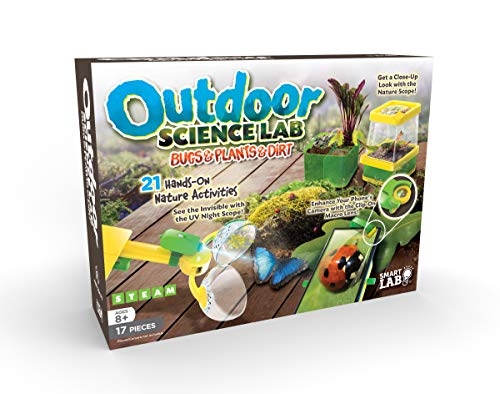
The SmartLab Outdoor Science Lab invites kids to explore nature through botany and related sciences with 24 hands-on activities. The kit includes multiple components such as a bug nabber, UV night scope, nature scope viewer, macro lenses, and a 32-page science activity book. It enables a broad range of investigations—from plant identification and soil testing to observing ecological interactions—encouraging curiosity about how plants grow in relation to their environment. With more than 21 nature-focused activities, this kit supports extended outdoor exploration and helps learners connect scientific concepts to real-world ecosystems.
Key strengths include a comprehensive toolset, structured activities, and opportunities to study plant growth, soil quality, and environmental factors in outdoor settings. The outdoor emphasis broadens the scope beyond the classroom, promoting inquiry-based learning through observation, measurement, and hypothesis testing in natural habitats.
WILD! Mars Landing Survival Kit
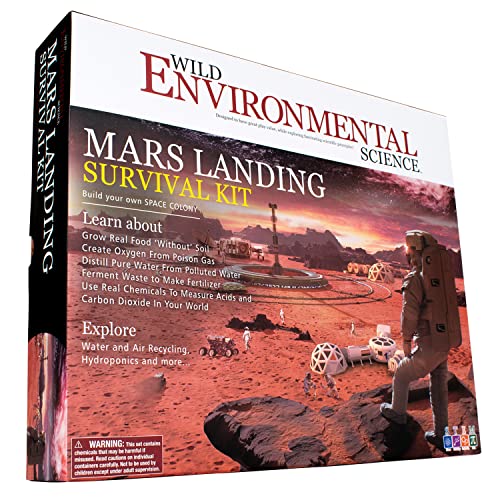
The Mars Landing Survival Kit from WILD! Science focuses on space-age ecological engineering and plant growth in a Martian-like environment. Learners build a biodome, prepare Martian soil, and cultivate plants to illustrate how plants produce oxygen and support life in harsh conditions. Seeds are included, enabling a hands-on exploration of germination, photosynthesis, and life-support cycles in extreme environments. The project emphasizes eco-engineering, sustainability, and the ways humans might adapt to grow food on other planets. This kit is well-suited for classrooms or homeschool projects that blend biology with environmental science and space exploration.
Educational value centers on observing plant adaptation, soil composition, water cycles, and the role of plants in sustaining atmospheres and ecosystems. Students gain insights into interdisciplinary science by combining botany, environmental science, and space ecology in a single, immersive activity.
4M Green Science: Clean Water

The 4M Green Science kit provides a hands-on approach to water science, featuring a mini water filtration and distillation system, solar-powered disinfection, and a detailed booklet with suggested experiments. Learners build and test a filtration plant to understand how clean water is produced and why filtration matters. The solar disinfection component introduces renewable energy concepts and demonstrates how sunlight can aid water purification. This kit aligns with core science strands such as chemistry, physics, and environmental science, offering practical demonstrations of filtration principles, distillation, and the science behind drinking water safety.
Key considerations include kit completeness, safety, and suitability for various age ranges. The solar-powered aspect adds an accessible energy lesson, while the clear steps and experiments support structured learning as well as open-ended exploration of water quality, filtration materials, and health-related science.
Buying Guide: Key Purchase Considerations
- Hands-on scope: Look for kits that cover multiple plant processes (germination, root growth, transpiration, photosynthesis) to maximize learning versatility.
- Age and complexity: Match the kit’s difficulty to the learner’s age and interest. Some sets are feature-rich and classroom-ready, while others are simpler and home-friendly.
- Materials and seeds: Kits that allow using common pantry seeds reduce ongoing costs and increase accessibility. Ensure seeds are non-GMO and safe for kids if included.
- Visual aids and documentation: Clear guides, illustrations, and easy-to-follow steps help maintain engagement and support independent exploration.
- Eco and STEM alignment: Choose products that emphasize scientific inquiry, data collection, hypothesis testing, and discussion of biological concepts.
- Safety and cleanup: Check for non-toxic materials, easy cleanup, and parental supervision requirements for younger children.
- Expansion potential: Consider kits that can be supplemented with additional seeds or components to extend learning over time.
- Multimodal learning: Favor kits offering a mix of observation, measurement, and hands-on manipulation to accommodate different learning styles.
- Community and support: Look for educational kits that provide activity guides, tips for troubleshooting, and ideas to integrate with school curricula.
Overall, these plant- and ecology-centered kits provide structured, inquiry-based experiences that illuminate essential concepts in plant biology, ecology, and environmental science. When selecting a kit, consider how its activities align with your learning goals, available space, and the learner’s curiosity about the natural world.