Choosing the right paper is essential for pen and ink work. The wrong surface can feather, bleed, or dull fine lines, while the right paper enhances line precision, tonal range, and archival quality. Below are five top picks that balance smoothness, brightness, and durability, making them suitable for both beginners and seasoned artists working with felt tip, gel, fountain, and technical pens. A quick summary table follows to help you compare at a glance.
| Product | Brand | Weight / Surface | Best For |
|---|---|---|---|
| Canson C400100928 XL Series Pen & Ink White | Canson | Ultra-smooth, bright white | Clean lines, minimal feathering |
| Strathmore 300 Series Bristol Paper Pad | Strathmore | 100 lb / 270 gsm, smooth | Fine detail, markers and ink |
| Canson XL Series Bristol Paper | Canson | 100 lb / 260 gsm, smooth | High-contrast pen work |
| Sax Pen and Ink Drawing Paper | Sax | 80 lb, bright white, sulphite | Pen and ink lines, technical drawing |
| ALKALO Square Sketchbook | ALKALO | 122 lb / 180 gsm, mixed media | Charcoal to ink, versatile surface |
Each option below highlights how it performs with pen and ink, along with practical notes about surface texture, bleed resistance, and archival qualities. Consider your typical ink type, whether you prefer bright white or off-white, and how much you value durability for travels and scans.
Canson XL Series Pen & Ink Paper For Crisp Lines
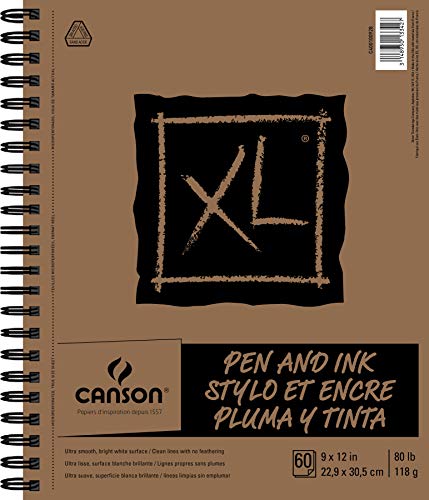
This ultra-smooth, bright white paper offers clean, crisp lines with minimal feathering, making it ideal for felt tip, gel, and ballpoint pens. Its sturdy surface supports detailed ink work without bleeding through, and the bright tone helps ink stand out for sharp scans and reproductions.
Canson XL Series Bristol Paper (Smooth)
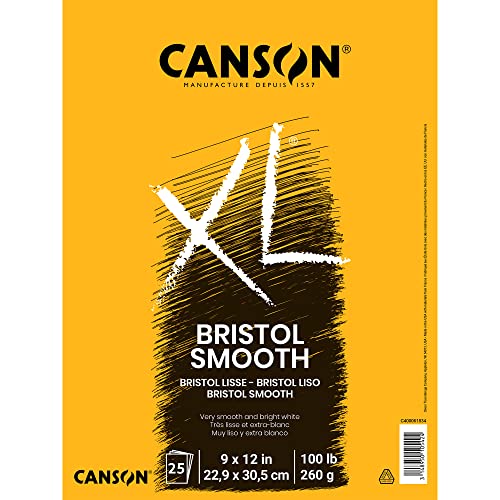
A heavyweight Bristol surface with a smooth finish provides excellent contrast for pen and ink, while staying sturdy enough for multiple passes and erasing. It works well with markers, pencils, and ink pens, making it a versatile choice for finishing touches and fine detail work.
Strathmore 300 Series Bristol Paper Pad
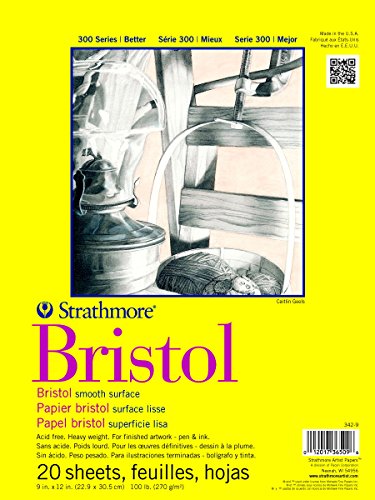
This heavy Bristol weight paper is designed for final artwork with pen, ink, airbrush, and markers. Its 100 lb / 270 gsm acidity-free surface ensures smooth line work and excellent detail, with a surface ideal for precise pen drawing and ink washes without excessive bleed.
Sakae Technical Blotting Paper (Bamboo)

For ink work that uses wet pens, blotting paper helps manage excess ink and prevents feathering on more absorbent surfaces. Bamboo-based, acid-free blotting paper provides quick absorption and compatibility with fountain pen ink, making it a practical companion to sketch and practice sheets.
GETFOO White Gel Pens Lot (6-Pack)

While primarily a pen brand, these opaque white gel pens perform exceptionally on dark or colored papers, enabling highlight work and signings that pair well with pen and ink drawings. The 0.6 mm tip allows for precise detailing and clean accents on lighter inks or darker backgrounds.
Paper Mate InkJoy Gel Pens

A reliable option for smooth writing with minimal smear, these gel pens deliver consistent ink flow and a comfortable grip—helpful for long drawing sessions and precise line work on compatible surfaces. They pair well with light to medium-weight papers to avoid excessive bleed.
ALKALO Mixed Media Sketchbook

ALKALO’s sketchbook uses thick, acid-free paper suitable for multiple media, including ink pens and markers. Its 180° lay-flat binding and hardcover provide a practical surface for expansive pen work and scoping shadows without distortion in scans or reproductions.
Buying Guide: Key Purchase Considerations
- Paper Weight and Thickness: Heavier stocks (e.g., 100 lb / 270 gsm Bristol) resist bleeding and allow both fine lines and light washes. For travel sketching, a lighter option may reduce bulk.
- Surface Texture: Smooth surfaces yield crisp lines with pens; lightly textured surfaces can produce desirable shading but may cause variable line quality with certain nibs.
- Acidity and Archival Quality: Acid-free or archival papers resist yellowing over time, ensuring long-term stability for ink drawings and prints.
- Ink Compatibility: Consider the ink types you use (fountain, pigment, gel, felt tip). Some papers feather with certain inks or bleed through thicker lines.
- Brightness and Tone: Bright white surfaces make inks pop and scan well; off-white or cream papers can soften contrasts and reduce glare in photos and documents.
- Bleed-Through and Show-Through: If you work on both sides of a page, choose papers with good front-side performance to minimize showing through to the opposite page.
- Multi-Purpose vs. Specialty: If you frequently switch between media (charcoal, ink, markers), a mixed-media paper offers flexibility but may trade some ink-optimized performance.
- Portability: Pad or sketchbook formats are convenient for field work, but loose sheets can be easier to preserve flat for scanning or framing.
- Texture and Scanning: Very smooth papers scan well for digital archiving; heavily textured papers may require careful lighting during photography or scanning to avoid glare.
The best choice depends on your typical workflow: whether you prioritize bleed resistance for fine line work, ease of erasing for pencil layouts, or the archival longevity of your finished pieces. For pen-centric drawings, Bristol and Bristol-like smooth papers consistently deliver crisp lines and reliable performance with a range of inks and markers. For practice and experiments, mixed-media papers provide forgiving surfaces that accommodate multiple media without major feathering or warping.