Whether you’re binding your own journals, preparing scrapbook pages, or trimming book blocks with precision, a reliable guillotine paper cutter is essential. This guide highlights top models that balance cutting capacity, accuracy, and safety, helping you choose a cutter that fits your bookbinding needs. Each option below is evaluated for durability, ease of use, and cutting quality to support clean, professional results.
| Product | Brand | Cutting Length | Capacity |
|---|---|---|---|
| HFS Heavy Duty Guillotine Paper Cutter | HFS | 12 inches | Up to 400 sheets |
| Swingline ClassicCut Lite Trimmer | Swingline | 12 inches | Up to 10 sheets |
| Firbon 12″ Guillotine Paper Cutter | Firbon | 12 inches | Up to 12 sheets |
| Amazon Basics 15-Inch Paper Trimmer | Amazon Basics | 15 inches | Up to 10 sheets |
| Westcott 12″ TrimAir Guillotine | Westcott | 12 inches | Up to 30 sheets |
HFS Heavy Duty Guillotine Paper Cutter

The HFS model offers a robust 12-inch cut length with a substantial capacity. Its claimed 400-sheet capacity (for standard 2.85 oz letter paper) is supported by a solid steel construction designed for long-term use. The built-in heavy-duty clamp minimizes paper shifting and drag, ensuring consistent cuts across the entire width. A removable handle enhances storage flexibility, and rubber feet reduce movement during operation. This cutter is suitable for pro-grade bookbinding tasks where multiple sheets must be trimmed evenly in a single pass.
Key considerations for this unit include its weight and footprint: the base measures 21″ by 15″, which provides a stable platform for larger projects, yet requires dedicated workspace. While the model excels at high-volume trimming, users should verify their target paper thickness to stay within the stated capacity. For frequent, large-scale trimming, the reliability of a 400-sheet pass and the sturdy build can translate to fewer adjustments over time.
Swingline ClassicCut Lite 12″ Trimmer
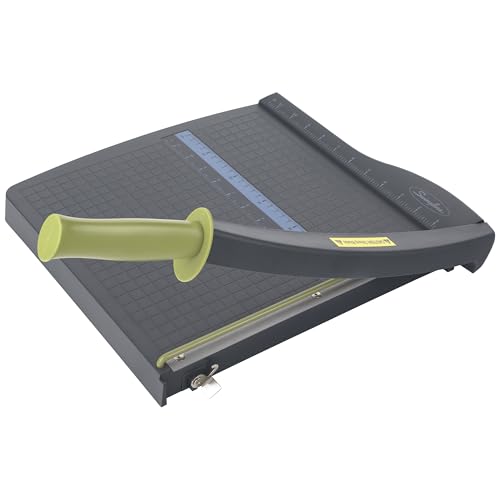
The Swingline ClassicCut Lite emphasizes ease of use and portability. With a 12″ cut length and a capacity suitable for up to 10 sheets, this model balances everyday home or small-office trimming needs with a compact footprint. An alignment grid helps users position sheets accurately, while a sturdy plastic base reduces weight for easy transport. The trimmer is well-suited for routine craft projects, photo trimming, and light bookbinding tasks where precision and quick setup are valued over heavy-duty capacity.
Considerations include its lower sheet capacity compared to professional bindery cutters. For multiple-stapled or very thick book blocks, this unit may require several passes or alternative methods. However, for most hobbyist binders and scrapbooking enthusiasts, the lightweight design and straightforward operation offer a dependable, budget-friendly option.
Firbon A4 12-Inch Paper Cutter
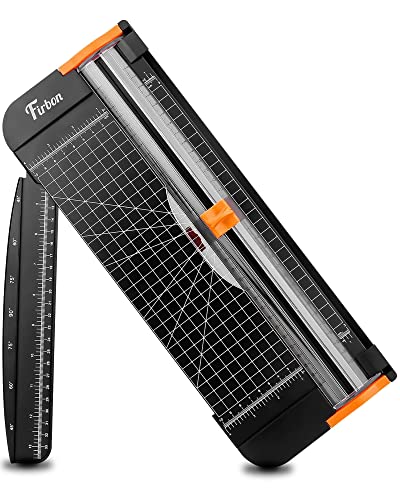
This Firbon cutter is designed to trim A3-A4 range papers with a 12″ cut length and a maximum cut of up to 10 sheets. It includes an automatic security safeguard and a side ruler to assist with alignment, important for precise trimming of book pages, scraps, and coupons alike. The device emphasizes accuracy through a 45- to 90-degree measuring plate and metric-imperial scales, making it suitable for crafts and light bookbinding projects. The base features a sturdy construction intended to resist movement during cuts, and the blade is designed for clean, straight edges.
Practical considerations involve blade replacement ease and the balance between blade longevity and cutting capacity. For frequent, thicker-page jobs or premium book blocks, model-specific capacity and blade engineering should be inspected to ensure long-term performance in a bookbinding workflow.
Amazon Basics 15-Inch Paper Trimmer

The Amazon Basics paper trimmer offers a longer 15-inch cut that caters to wider sheets and longer book pages. A self-sharpening steel blade helps maintain clean cuts, with safety features such as a blade guardrail and blade lock to prevent accidents during storage or use. The unit is designed for versatile usage, including construction paper, cardstock, and photos, which makes it a practical option for beginners and hobbyists working on bookbinding projects with diverse materials. The overall construction emphasizes stability and safe operation, important for manual trimming in craft settings.
Key trade-offs include the lighter-duty capacity relative to industrial cutters. While it handles a range of materials, tasks requiring heavy, repeated trimming of thick stock or large volumes may benefit from higher-capacity models. For mixed-use environments—crafting, school projects, and small runs—the Amazon Basics trimmer provides reliable performance with a favorable price-to-performance ratio.
Westcott 12″ TrimAir Guillotine

The Westcott TrimAir model is designed for heavier-duty use, offering a 12″ cutting length and a 30-sheet capacity in some configurations. Its titanium-bonded blade is engineered for longevity and sharpness, aiming to retain edge performance longer than standard stainless steel blades. The cutting system emphasizes improved durability for frequent trimming of heavier materials, such as fabric, vinyl, or thick paper stacks, which can be advantageous for bookbinding workflows that involve mixed media. The guard features and overall design focus on safety and clean cuts, with attention to long-term performance in busy crafting environments.
When considering this option, assess your typical stock thickness and the frequency of large trims. The higher capacity and tougher blade are ideal for more demanding tasks, but the unit may be heavier and more expensive than lighter-duty models. For professional hobbyists and small shops, the Westcott TrimAir can provide a robust balance of power, precision, and longevity.
Buying Guide: Key Purchase Considerations For Bookbinders
- Cutting length and capacity: Match the cutter’s maximum cut and sheet capacity to your project scope. Bookbinding often requires trimming multiple sheets at once; a higher-capacity model reduces handling time but may take more space.
- Base stability and construction: A solid steel or heavy-duty base minimizes movement during cuts and improves accuracy. Look for rubber feet and a clamp system that applies even pressure across the cut line.
- Blade quality and replacement: Durable blades—such as titanium-bonded or high-grade steel—maintain sharpness longer. Consider models with easy blade replacement to minimize downtime.
- Safety features: Guard rails, blade locks, and clamps protect fingers and hands during operation and storage. For classrooms or shared studios, prioritize safety-first designs.
- Ease of use and accuracy aids: Alignment grids, measuring scales, and built-in rulers help achieve precise cuts, especially when trimming close to binding edges or cover templates.
- Material compatibility: Ensure the cutter can handle your typical media—cardstock, photo paper, lamination, or light cardstocks. Some cutters are optimized for specific thickness ranges.
- Portability vs. footprint: If you have limited workspace, consider compact models. For a dedicated bindery area, a larger, higher-capacity cutter may be preferable.
- Budget vs. long-term value: Higher upfront cost often correlates with durability and lower replacement frequency. Weigh the expected volume of trimming against the price.
In selecting a paper cutter for bookbinding, balance capacity, cut length, and safety with the type of projects you undertake. Each model listed above offers distinct advantages—from high-volume, industrial-style cutters to lighter, portable trimmers suitable for craft projects and small studios. Evaluating your typical page sizes, stock weights, and binding methods will guide you to the best choice for clean, consistent trims.