Whether you’re building cosplay armor, prop weapons, or decorative models, painting EVA foam requires materials that hold color well, shape easily, and stay durable through wear. The following selections focus on high-density EVA foam sheets and compatible clay or filler options that pair well with common hobby paints, sealants, and airbrushing techniques. This guide helps you compare size, density, and finish potential so you can choose the best base for vibrant, long-lasting painted results.
Summary of chosen products
| Product | Brand | Type | Size / Thickness | Notable Feature |
|---|---|---|---|---|
| Black Foam Sheets Roll, 4mm | MEARCOOH | EVA Foam Sheet | 59″ x 13.9″, 4mm | High density, strong shape retention |
| The Foamory Moldable Foam Clay (300g) | The Foamory | Air-dry Foam Clay | 300g | High detail, adheres to EVA while wet |
| Foam Clay Air Dry (300g, Black) | Pixiss | Air Dry Foam Clay | 300g | Lightweight, flexible after drying |
| EVA Foam Roll 2mm (14 x 39 in) | The Foamory | EVA Foam Sheet | 14″ x 39″, 2mm | Excellent density for detailed work |
| AMZQNART EVA Foam Roll 5mm | AMZQNART | EVA Foam Sheet | 16″ x 59″, 5mm | Large size, high density for durable builds |
MEARCOOH 4mm EVA Foam Sheet

The MEARCOOH black EVA foam sheet is a large, dense roll measuring 59 x 13.9 inches with a 4mm thickness. This combination provides ample, sturdy material suitable for cosplay props and armor bases. The foam is formulated for durability and retains its shape well, reducing warping during painting and finishing. It accepts paints, primers, and sealants well, helping you achieve a smooth base layer before detailing. The sheet’s density supports clean cuts, minimal tearing, and reliable edge work for complex armor components.
The Foamory Moldable Foam Clay (300g)
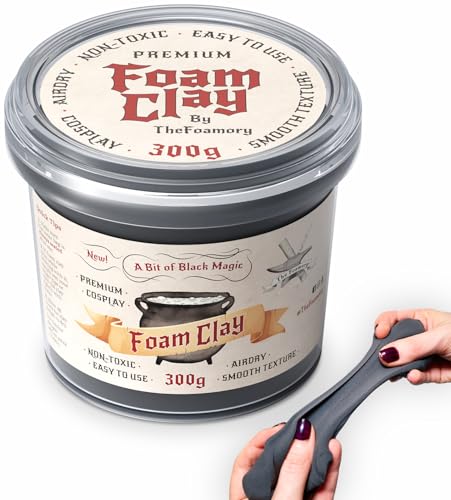
The Foamory’s 300g black moldable foam clay offers high detail and is designed to attach to EVA foam while wet. Its air-dry formula retains fine textures and supports strong adhesion with lightweight, flexible results after curing. This clay is ideal for adding intricate raised details, filigree, or recessed patterns that will be painted later. You can shape, press into silicone molds, and then rely on a solid base for color layering. Expect excellent paint adhesion once fully dried, with a smooth surface for primers and metallic finishes.
Pixiss Foam Clay Air Dry (300g, Black)

Pixiss foam clay is a lightweight, black, air-dry option that maintains shape after drying. It’s flexible enough to handle some bending or light stress without cracking, which helps when assembling large cosplay pieces that include curves and edges. This clay is suitable for creating texture or forms on EVA foam bases before painting. It sands and sculpts similarly to other foam clays, and its color can be tinted with paints or left as a base for metallic or weathered finishes.
The Foamory EVA Foam 2mm Sheet

This 2mm EVA foam sheet is part of The Foamory’s line with a true high-density of 85 kg/m3, offering excellent toolability for small parts and details. While thinner, it remains durable for shaping and layering when building armored components. The smooth faces reduce surface imperfections, aiding paint application. Because of its light weight, it’s convenient for detailed trims or articulated joints in costumes, where color consistency across layers matters for a polished final look.
AMZQNART EVA Foam Roll 5mm

AMZQNART’s 5mm EVA foam roll provides a substantial base for large cosplay builds. At 16 x 59 inches with 5mm thickness and a high density of 90 kg/m3, this sheet supports robust shaping, sanding, and painting workflows. The thicker foam reduces the number of seams in bigger armor segments and offers a stable platform for airbrushed gradients or hand-painted weathering. It’s well-suited for creating large chest plates, shoulder caps, or weapon designs where color fidelity and edge integrity are critical.
Buying Guide: Key Considerations for Painting EVA Foam
- Density and edge integrity: Higher-density EVA foam holds its edges during sanding and painting, reducing prep time and improving paint adhesion.
- First-pass priming: Use a flexible primer designed for foam to prevent cracking. PVA glue sealants or acrylic primers work well, followed by light sanding for a smooth base.
- Paint compatibility: Acrylic paints, fabric paints, and spray primers work with EVA foam. Avoid solvent-based paints that may degrade foam if not properly sealed.
- Finish options: For metallic or weathered looks, consider using metallic acrylics, dry brushing, or weathering powders. Sealants like matte or satin sprays help protect colors without cracking on flex areas.
- Adhesion and patches: If adding clay or dowels, ensure wet adhesives cure fully and test paint compatibility on a hidden area first to avoid finish issues.
- Heat shaping and memory: Some foams respond to heat for shaping. When painting, avoid excessive heat near freshly painted areas to prevent softening or re-shaping.
- Seams and textures: Plan seam placement away from visible areas; use texture tools or airbrush stencils to blend joints into the surface for a seamless finish.
- Storage and handling: Store foam sheets flat or rolled with protective layers to prevent creases. Keep away from direct sunlight to prevent discoloration of dyes and finishes.
- Layering strategy: Build up thin layers of paint or sealant to prevent heavy coats from distorting fine details. Light sanding between layers improves adhesion and smoothness.
In practice, start with a high-density sheet for main components, add detail with moldable foam clay or foam clay for texture, then prime and paint in stages. For large pieces, a thicker sheet like the AMZQNART 5mm roll provides a sturdy base, while the Foamory sheets offer precision for intricate designs. Always test paint on a sample scrap to calibrate color and adhesion before committing to the final piece.