What’s in this guide
Leather engraving blends artistry with precise technology. This guide highlights five reliable laser engravers that excel at leather work, offering differing power levels, working areas, and software compatibility to fit hobbyists and small studios alike. Each option balances accuracy, safety, and user experience, helping you choose a machine that delivers clean, consistent results on leather projects—from personalized tags to intricate designs.
Summary of chosen products at a glance:
| Product | Brand | Engraving Area | Power | Key Benefit |
|---|---|---|---|---|
| ACMER S1 | ACMER | 5.1 x 5.1 in | 3,500 mW | Wood, leather, and more with fine detail |
| Creality Falcon 5W | CREALITY FALCON | 400 x 415 mm | 5 W | High precision with large work area |
| Carverall K15 Pro | Carverall | 200 x 300 mm | 5 W | Real 5W power with broad material compatibility |
| LONGER Ray5 5W | Longer | 400 x 400 mm | 5 W | High speed and precision for larger projects |
| xTool F1 | xTool | Varies (enclosed) | 2 W infrared / 10 W diode | Dual laser technology for wood and metal |
ACMER S1 Laser Engraver For Beginners

ACMER’s S1 model delivers 3,500 mW of laser power with a class 4 designation, enabling engraving on more than 100 materials, including leather. The device uses a fine 0.04 x 0.04 mm spot and offers speeds up to 10,000 mm/min, supporting detailed leather patterns and shallow cuts. A 5.1 x 5.1 inch workspace keeps small leather pieces grippable while maintaining portability. Compatibility with LightBurn and LaserGRBL makes it approachable for hobbyists upgrading from entry-level tools. The machine’s compact footprint supports home studios and makers’ spaces where desk real estate matters.
Creality Falcon 5W Laser Engraver
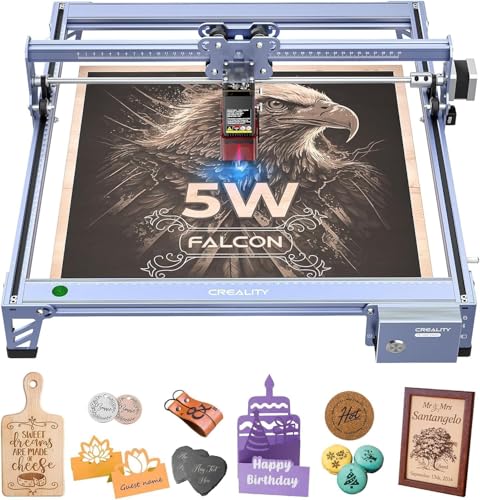
Creality Falcon offers a larger working area of 400 x 415 mm and a 5W laser, providing robust power for leather engraving with high precision. The 0.06 x 0.06 mm compression spot and a precision target of about 0.004 inches allow crisp leather textures and fine lines. A 32-bit control chip enhances engraving speed up to 10,000 mm/min, supporting batch tasks or more complex leather designs. Optional rotaries and risers expand capabilities for cylindrical objects or taller pieces, making it a strong choice for small shops seeking scalability.
Carverall K15 Pro 5W Laser Engraver
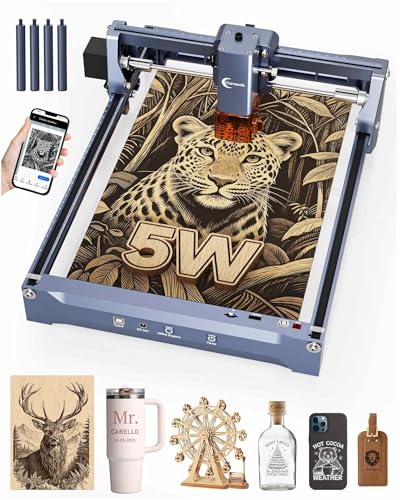
Carverall’s K15 Pro emphasizes real 5W power with a robust 200 x 300 mm work area, suitable for leather goods and coated metals. Its 0.01 mm precision coupled with a 15,000 mm/min speed enables detailed leather engravings and rapid prototyping. The kit includes safety features and uses a universal CutLabX interface, supporting LightBurn and LaserGRBL. A straightforward 90-second setup with six screws makes it accessible for beginners while still delivering professional-grade results on leather applications such as tags, plaques, and personalized gifts.
LONGER Ray5 5W Laser Engraver

The LONGER Ray5 stands out with a 5W laser and a 400 x 400 mm workspace, balancing speed and versatility for leather projects. It features a 0.08 x 0.08 mm laser spot and an engraving accuracy of 0.01 mm, supporting crisp leather textures and precise edge work. The ESP32-based controller enhances processing efficiency, making it suitable for larger leather panels, comprehensive patterns, or batch items where consistency matters. The accessible offline functionality supports studio workflows where connectivity is limited.
xTool F1 2-in-1 Dual Laser Engraver

xTool F1 combines a 2W infrared laser for metals with a 10W diode laser for wood and leather, delivering a dual-capability system in a compact, enclosed package. The high-speed 4000 mm/s capability helps with rapid leather marking and batch jobs. An enclosed chamber reduces smoke and odors, and a built-in air purifier option improves air quality in small spaces. Weighing around 4.6 kg, it’s portable enough for pop-up markets and craft fairs, while still offering professional-grade results for leather panels and accessories.
LaserPecker LP1 Pro Engraver

LaserPecker LP1 Pro is a palm-sized option designed for leather engraving with 0.15 mm precision and USB-Bluetooth connectivity. It supports simple 4×4 inch work areas, making it ideal for tags, small plaques, and personalized leather items. The device emphasizes safety with password protection and motion detection, offering a straightforward three-step workflow. The ultra-light form factor makes it easy to transport to craft shows or small studios where quick setup matters.
WAINLUXPRO K10 5W Portable Engraver

The WAINLUXPRO K10 units deliver 5W with a portable, fully enclosed design and a 80 x 80 mm engraving area, tailored for leather work and other small materials. It supports offline operation and provides safety features such as auto-stop when the cover opens and tilt detection. It’s compatible with CutLabX, Lightburn, and LaserGRBL, with a self-developed app and a library of presets to jump-start leather projects from tags to customized accessories. The compact form factor favors desk setups and mobile studios alike.
Buying Guide: Key Considerations For Leather Engraving
When selecting a laser engraver for leather, consider power, work area, accuracy, and ease of use. Leather projects benefit from steady, clean lines and the ability to handle different thicknesses. Higher wattage can speed up engraving on thicker hides, but smaller, more precise spots yield finer textures. A larger work area helps with bigger leather pieces such as wallets or journal covers, while a compact enclosure reduces fumes and noise in home studios.
Safety should be a priority. Look for enclosed designs, onboard safety features (auto-stop when the lid opens, tilt sensors), and smoke management. Software compatibility matters for workflow: LightBurn and LaserGRBL are common, with some models offering built-in apps or offline operation for distraction-free work. Dual-laser options can expand material compatibility, particularly for translucent or colored leather surfaces where contrast matters.
Durability and ease of assembly influence long-term satisfaction. Models that ship with all required accessories—glasses, test materials, mounting hardware—reduce setup friction. Consider service and firmware updates from the manufacturer, as well as community support and available replacement parts for ongoing projects. If you plan to scale your leather production, evaluate a machine’s upgrade options, such as larger beds, rotary attachments, or additional safety features.
In summary, choose a model that matches your leather project size, desired level of detail, and your preferred software ecosystem. For beginners, a compact, enclosed unit with good safety features and strong support will minimize upfront hurdles. For hobbyists growing into small-batch production, a larger work area with reliable speed and easy upgrade paths may be the best fit.