Finding the right heat treat oven or forge is essential for consistent knife tempering, edge retention, and blade durability. This guide highlights five top options that balance power, safety, and value for American knife makers. Each listing features a dedicated heat source, temperature capability, and practical design considerations to help you choose a model that fits your workshop needs and workflow.
Selected products at a glance
| Product | Brand | Key Feature |
|---|---|---|
| Knife Makers Kiln | 2200°F | Hot Shot | High max temperature with cool-to-touch tech |
| KnifeDogs Blade Fixture | USA Knifemaker Supply | 3-slot blade holding for controlled heat treating |
| Single Burner Portable Metal Propane Forge | SIMOND STORE | Portable, high-heat forge for knifemaking |
| Single Burner Portable Metal Propane Forge | SIMOND STORE | Beginner-friendly, compact and high heat |
| Propane Gas Forge, Double Burner | Yoursme | High heat with oval chamber design for efficient heating |
Note: This article focuses on practical, metalworking heat-treat and forge solutions suitable for knife making, balancing temperature capability, safety, and ease of use for hobbyists and professionals alike.
Knife Makers Kiln by Hot Shot: 2200°F Heat Treat Oven

The Hot Shot Knife Makers Kiln HS-18K-TA2-120 delivers a high-temperature capacity up to 2200°F (120V, 15A). This unit emphasizes a cool-to-touch exterior design for safer operation in busy shops. It is designed to fit knifemaking workflows that require precise heat cycles and reliable tempering performance. Consider this model if you routinely temper high-carbon steels and need robust maximum heating without frequent temperature overshoot. Safety features and temperature control are key considerations for long sessions and consistent blade performance.
KnifeDogs Blade Fixture for Heat Treating Knives
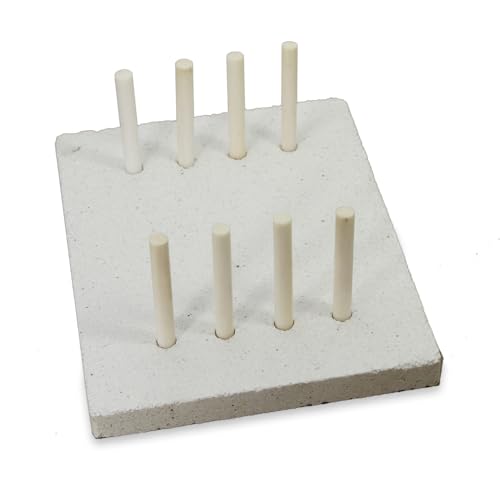
The KnifeDogs blade fixture is a specialized accessory designed to hold three blades in a fixed position during heat treatment. Its compact footprint (about 4.5″ wide by 5.9″ deep) and three-slot design enable uniform heating across multiple blades in a single cycle. This fixture is particularly useful when batch processing blades or performing two-stage heat treatments where blade alignment and consistent spacing are important for even temper distribution. Pair this with a compatible kiln or forge for repeatable results in your shop.
SIMOND STORE Single Burner Portable Metal Propane Forge

This SIMOND STORE single-burner portable propane forge is designed for knifemaking and heat treatment. It emphasizes portability and a compact footprint while delivering high heat suitable for shaping and tempering. Features typically include durable construction, insulation to minimize heat loss, and an accessible interior for maneuvering blades or smaller workpieces. It’s a practical choice for makers who want to relocate the forge within a workshop or take it to a temporary workspace for demonstrations or craft fairs.
SIMOND STORE – Second Portable Propane Forge

This adjacent SIMOND STORE single-burner portable forge offers a beginner-friendly entry into hot-forge work. Its compact design and lightweight construction make it accessible for hobbyists exploring heat-treatment techniques. The forge is described as delivering high heat outputs suitable for basic blade shaping and tempering exercises, while its portable nature supports flexible workshop layouts. It can serve as an initial platform before upgrading to larger or more controlled heat treatment systems as skills advance.
Yoursme Propane Gas Forge: Double Burner

The Yoursme propane forge uses a double-burner design and an oval chamber that supports substantial heating capacity, with reported maximum heating up to around 2600°F. It is positioned as a versatile option for knife making and tool forging, offering efficient heat distribution and a larger workspace inside the chamber. The design includes protective insulation and a robust exterior, making it suitable for sustained sessions and more demanding heat-treat cycles. This model is relevant for makers who need rapid heating and the flexibility of longer heat cycles for tempering.
Buying Guide: Key Considerations for Heat Treat Ovens and Knives
When selecting a heat treat oven or forge for knife making, buyers should consider several factors to ensure reliable performance and safety:
- Temperature Range and Stability: Higher maximum temperatures (e.g., 2200–2600°F) are beneficial for hardening high-carbon steels, but stability and uniformity of the temperature across the work surface matter for consistent results.
- Heat Distribution: Uniform heating across blades and fixtures minimizes warping and ensures even tempering. Fixtures or trays should position blades away from direct flame and allow even heat exposure.
- Controls and Safety: Look for precise thermocouples, PID control, over-temperature protection, and easy-to-read displays. A cool-to-touch exterior reduces the risk of burns in busy workshops.
- Footprint and Mobility: For smaller shops or portable setups, a compact forge or a portable propane unit can save space and enable on-site demonstrations or temporary setups.
- Fixtures and Accessories: Blade fixtures, clamps, and holding jigs improve repeatability. Compatibility with existing tools and a modular approach can extend the system’s lifespan.
- Ventilation and Safety Gear: Proper ventilation is essential when using propane or high-heat equipment. Have safety gear and fire suppression on hand for responsible operation.
- Cost of Operation: Consider fuel efficiency (propane vs. electric), maintenance needs, and potential replacement parts as part of total cost of ownership.
For many knife makers, the decision comes down to balancing maximum heat capabilities with practical workflow integration. Ovens and forges with reliable temperature control and safety features offer consistent tempering results, while modular fixtures expand versatility for batch work. Beginners may start with compact, portable units and gradually expand to higher-capacity setups as skills and production demands grow.