What’s in this guide
Choosing the right plaster of Paris product can influence the strength, finish, and workability of repairs or crafts. This guide highlights five compatible powders and clays that pair well with plaster-based projects, along with practical tips for mixing, setting, and finishing. Each option is evaluated for quick set time, paint compatibility, and ease of use to help you select the best fit for interior repairs, molds, and decorative casts.
Summary of Selected Products
| Product | Brand | Typical Uses | Set Time (approx.) |
|---|---|---|---|
| DAP Plaster of Paris (Dry Mix), White, 4 Lb Box | DAP | Hole repairs in walls/ceilings; crafts and molds | 20–30 minutes |
| DAP 10310 Plaster of Paris Tub Molding Material, 8-Pound | DAP | Repair plaster surfaces; adaptable to painting | 20–30 minutes |
| Falling in Art 5 LB Plaster of Paris Powder | Falling in Art | Crafts, sculpture, dioramas | 30 minutes to fully dry |
| Eco Resin Casting Powder 1KG | Bond Craftor | DIY home art casting and lightweight molds | About 30 minutes demold; fully cured ~2 hours |
| Navaris Plaster Cloth Rolls (S, Pack of 10) | Navaris | Plaster bandage projects; body casts and crafts | Drying varies by project |
Across these options, you’ll find a range of setting times, textures, and finishing potential. The following sections provide focused product overviews to help you compare their strengths for plaster-based repairs and decorative work.
DAP Plaster of Paris (Dry Mix) Review

DAP’s dry mix is designed for interior repairs on plaster walls and ceilings, offering a professional finish once set. The powder-to-water ratio is straightforward, and the mix sets in roughly 20–30 minutes, enabling quick turnarounds for small to mid-sized repairs. It accepts oil- or latex-based paints after curing, making it versatile for patching and finishing. This product is favored by homeowners and pros for its predictable setting, reliable hardening, and clean-up simplicity—tools should be washed promptly to prevent residue buildup.
DAP Plaster of Paris Tub Molding Material
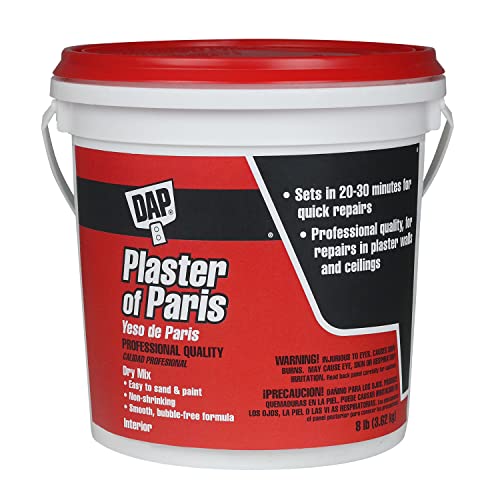
This 8-pound tub provides a professional-grade option for repairs in plaster walls and ceilings. It sets quickly in about 20–30 minutes and accepts paint from oil- or latex-based systems after curing. The product’s consistency and workability are well-suited for both skilled applications and hobby projects, making it a reliable choice for artisans and DIY enthusiasts who require a smooth, durable finish.
Falling in Art Plaster Of Paris Powder (1 lb)

Falling in Art’s 1-pound powder emphasizes safety and precision for small casting projects and molds. The mix ratio is easy to remember (roughly 3 parts water to 4 parts plaster), with solidification in 3–4 minutes and a hard finish in about 30 minutes. It’s particularly suitable for detail work in crafts, dioramas, and small sculpture pieces, and it tolerates painting with markers or watercolors after drying.
Falling in Art 5 LB Plaster Of Paris Powder

The 5-pound bag expands on the 1-pound option with greater volume for larger projects or multiple molds. Like the smaller version, it emphasizes safety and straightforward mixing, with a similar 30-minute dry time. This option is ideal for hobbyists undertaking multiple pieces or casting larger details, offering consistent texture and reliable demolding when used as directed.
Eco Resin Casting Powder 1KG

Eco Resin Casting Powder is marketed for environmentally friendly, mineral-derived plaster casting. It blends without odor and is non-toxic, aligning with sensitive indoor spaces. The recommended powder-to-water mix yields a smooth paste suitable for hand-cast art, with a demold time around 30 minutes and full cure in roughly two hours. It supports colorwork with water-based acrylic paints after curing and is a solid choice for hobbyists seeking sustainable materials for home art projects.
Navaris Plaster Cloth Rolls (10-Pack)

Navaris plaster cloth rolls are pre-impregnated with plaster powder, enabling quick modeling and sculpting on forms, skins, or body casts. Dip the wrapping strips in water to activate plaster and apply them to the desired shape. This product is well-suited for art-based projects, masks, and lightweight body-casting exercises. Drying times vary by thickness and ambient humidity, but the system is praised for its ease of use and skin-safe formulation.
Buying Guide: Key Purchase Considerations And Comparisons
- Intended use: For repairs, choose a product with strong adhesion and paint compatibility, such as standard plaster mixes. For crafts and molds, consider powders labeled for detailed casting or fast demold times.
- Set and cure times: Shorter set times (20–30 minutes) enable faster turnaround for repairs; longer cure times can improve strength for larger pieces. Demold time is also a factor for multi-piece projects.
- Paint compatibility: Most plaster powders accept oil- or latex-based paints after curing. Confirm if the product requires priming or sealing prior to painting to achieve an even finish.
- Safety and odor: Mineral-based or non-toxic formulations are preferable for indoor use, especially in homes with children or pets. Look for low-odor or odor-free options when possible.
- Mixing ratio and ease of use: Simpler ratios (for example, 3 parts water to 4 parts plaster) reduce measurement errors and improve consistency across batches, which is important for uniform results in molds and dioramas.
- Volume and project scale: For larger projects, consider bulk options (like 5 lb or 8 lb bags) to minimize restocking interruptions. Smaller bags are convenient for repairs that require precision.
- Application method: Cloth rolls and bandages are useful for casting and forming complex shapes, while free-flowing powders are better for patching, sculpting, and flat surfaces.
- Finish and durability: If you plan to finish with paint or varnish, ensure the plaster finish accepts coatings evenly and resists cracking under expected use conditions.
When selecting a plaster-based product for repairs or crafts, align the material’s strengths with your project needs—fast repairs, detailed casts, or durable painted surfaces. Always follow the manufacturer’s mixing instructions, and test a small batch before tackling a larger piece to ensure the final appearance and strength meet expectations.