What’s in this guide
When bonding leather to wood, selecting the right adhesive is essential for a strong, lasting repair or project. The following Guide highlights top Amazon picks that offer durability, flexible bonds, and compatibility with both leather and wood substrates. Each product section includes practical considerations, typical use cases, and key features to help you compare options for furniture, crafts, or repairs.
Summary of chosen products
- Loctite Extreme Glue — Versatile all-purpose adhesive for leather, wood, metal, and more; dries clear.
- Fiebing’s Leathercraft Cement — Quick-drying, flexible leather glue designed for durable leather-to-leather or leather-to-other-material bonds.
- Duall-88 Leather Adhesive — High-strength, clear-drying leather bond with broad substrate compatibility.
- Cerca de Leather Glue — Transparent, waterproof, strong bond suitable for leather and assorted surfaces.
- Hzutloer Multi-Purpose Glue — 120 ml bottle with a brush tip for precise application; fast, water-resistant bonds.
Loctite Extreme Glue for Leather and Wood

Loctite Extreme Glue is positioned as a versatile, all-purpose adhesive suitable for wood, leather, metal, and more. Its non-foaming formula is designed to minimize mess during application, which helps when you’re working with leather and wood edges or small repair areas. The product dries clear, which is advantageous for visible joints on furniture pieces or decorative leather panels attached to wood frames. Typical uses include repairs, crafting, filling gaps, and creating durable bonds where fast curing is valuable. When bonding leather to wood, preparing surfaces by cleaning, drying, and lightly sanding any glossy coatings can improve adhesive contact. Users should allow adequate cure time per the manufacturer’s guidelines for strongest results. This option is particularly useful for quick fixes and hobby projects that require a straightforward, clean bond.
Key considerations: Great for mixed-material projects; compatible with leather and wood; clear-drying helps with appearance; non-foaming helps reduce mess. Limitations may include lower heat resistance than specialized furniture epoxies and potentially less impact resistance on highly flexible leather. For larger surfaces, clamping or weighting the pieces during cure can enhance bond uniformity.
Fiebing’s Leathercraft Cement

Fiebing’s Leathercraft Cement is a water-based, quick-drying adhesive designed for leather bonding with a range of materials. It emphasizes strong, flexible joints that remain durable over time, making it suitable for leather repairs on jackets, shoes, furniture, purses, and more. The cement format is useful when you need a thin, even layer to avoid stiff or bulky joints, and it can bond leather to itself or other substrates with a strong permanent bond. Users should apply thin layers to both surfaces, let them set to tack, and then press firmly to join. Surface preparation—cleaning and ensuring surfaces are dry—will improve adhesion. It is marketed as non-toxic and non-flammable, which can be a practical safety consideration in home workshops.
Key considerations: Strong, flexible bonds; quick drying; compatible with leather-centric applications and various surfaces. Best for projects where a durable leather-to-leather or leather-to-furniture bond is required. When bonding heavily textured or coated leather, ensure an even contact surface to avoid gaps that could weaken the joint. Temperature and humidity can influence cure time, so allow proper indoor conditions for best results.
Duall-88 Leather Adhesive
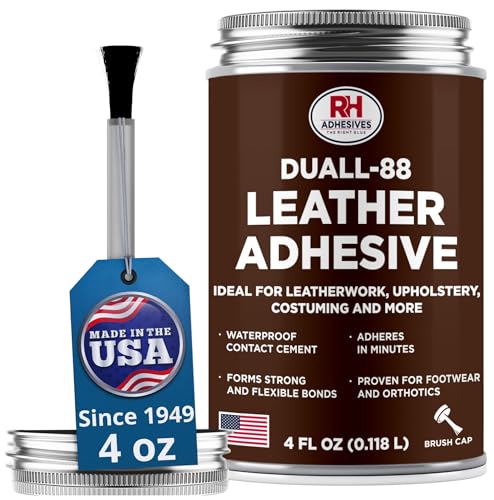
Duall-88 from RH Adhesives is marketed as a high-strength leather repair glue that dries clear, ensuring minimal visibility of repairs on finished leather items like shoes or handbags. It is designed to form a robust bond between leather surfaces while remaining flexible to accommodate leather movement. It also lists versatility beyond leather, capable of bonding EVA foam, metals, crepe rubber, and plastics, which can be helpful for mixed-material projects where leather interfaces with other substrates. When using a leather-specific adhesive, edge preparation and proper application thickness are important to avoid stiff bonds. This product is particularly suitable for professional repairs or crafts that demand a reliable, long-lasting leather seam.
Key considerations: High strength and clear-drying properties; compatible with multiple materials; suitable for repairs that require durable integrity. Consider using clamps or weights to maintain surface contact during cure, especially on larger leather assemblies. For delicate leather finishes, testing on a small area first is advisable to confirm that the bond remains visually discreet upon drying.
Cerca de Leather Glue (Clear)

Cerca de Leather Glue is described as a permanent, strong, waterproof adhesive suitable for leather bonding and leather furniture repairs. The product emphasizes versatility across types of leather and related items, including car seats, purses, sofas, jackets, and belts. A notable feature is its waterproof performance, which supports resilience in environments with moisture exposure or humidity. The packaging includes a hose-centered design and a precise nozzle to control glue output, which can be beneficial for detailed leather work where neat seams matter. While the blend works well with leather, readiness for other substrates should be validated through squeeze-tip control and a small test bond.
Key considerations: Waterproof strength; clear and strong bonding; versatile application in furniture and accessories. Best used when moisture exposure is possible or routine. When bonding porous leather to non-porous wood, ensure adequate surface preparation and consider clamping to minimize squeeze-out that could affect the finish. Reworkability is typically limited after full cure, so confirm fit and alignment before joining.
Hzutloer Multi-Purpose Glue

Hzutloer offers a multi-purpose, high-strength clear adhesive with a built-in brush for precision application. The 120 ml bottle is designed for frequent repairs and crafts, providing a controlled finish with its brush applicator. The product description emphasizes fast-drying, waterproof performance and strong bonds on wood, ceramics, leather, plastic, and other common DIY materials. For leather-to-wood projects, the brush tip can help achieve even adhesive coatings along edges or decorative trim lines. Ensuring surfaces are free from oils, waxes, and dust will improve bond quality, and clamping during cure may improve contact across larger joints.
Key considerations: Precision application with a brush; flexible, quick-drying bond; good value for frequent use. Consider working in stages for large areas to avoid excess squeeze-out. As with any multi-material adhesive, test on a scrap piece or inconspicuous area to confirm appearance and bond strength before final assembly.
Buying Guide: Key Purchase Considerations for Leather-to-Wood Bonding
- Bond strength and flexibility: Leather can flex with movement, so choose adhesives labeled for flexible bonds. For high-stress joints, look for high-strength formulations that remain somewhat pliable after curing to resist cracking.
- Substrate compatibility: Verify that the adhesive bonds well to both leather and wood, as well as any additional materials in the project (metal, foam, plastic, etc.).
- Drying and curing time: Fast-drying products save time, but slow-cure formulations can be more forgiving on large or intricate projects. Consider clamping strategies to maintain contact during cure.
- Water resistance: If the joint may encounter moisture, waterproof or water-resistant adhesives are advantageous, especially for furniture or car interiors.
- Clarity and aesthetics: Clear-drying formulations help keep joints less noticeable on finished pieces. For visible repairs, this is a practical consideration.
- Ease of use: Tools like built-in brushes or squeeze-nozzle designs improve control, reduce waste, and help you apply adhesive precisely along edges or seams.
- Safety and surface preparation: Non-toxic options are preferable for indoor use, but all adhesives benefit from surface cleaning, drying, and light surface roughening to maximize bonding.
- Repair vs. fabrication: For quick repairs, a fast-setting, clear adhesive is often adequate. For furniture-building or professional repairs, consider products with long-term durability and resistance to wear.
When selecting an adhesive for leather-to-wood projects, assess your specific application: the type of leather (smooth, textured, or finished), the wood surface (bare, sealed, or veneered), exposure to moisture or heat, and whether the repair must remain discreet. The products above provide a range of options from quick fixes to professional-grade bonds, enabling you to choose based on bond strength, cure time, and environmental conditions.