What’s in this guide
- OVERTURE ABS Filament: High Strength ABS For Durable Parts
- ELEGOO Carbon Fiber PLA Filament: Forged For Strong Parts
- eSUN PLA+ Filament: Stronger PLA For Indoor Projects
- DEEPLEE PLA+ Filament: Tough, Precise PLA+
- SUNLU PC-ABS Filament: High-Strength, Paint-Ready
- Creality PLA Filament Bundle: Value For Strong PLA Parts
- FLASHFORGE Carbon Fiber PETG Filament: High-Strength PETG-CF
- PRILINE Carbon Fiber Filament: Carbon Fiber PC Blend
- Buying Guide: Key Considerations For Strong Filaments
For makers seeking high-strength 3D prints, choosing the right filament is essential. This guide highlights five durable options that resist impact, heat, and wear, helping you produce functional parts, prototypes, and fixtures with confidence. Each filament below is noted for toughness, dimensional accuracy, and reliable feeding, making them solid choices for engineering, automotive, and industrial-inspired projects. Read on to compare materials, performance, and application fit to decide which filament best suits your needs.
| Product | Brand | Best For | Key Benefit |
|---|---|---|---|
| OVERTURE ABS Filament | OVERTURE | Heat-resistant parts, durable housings | Excellent heat resistance and glossy finish |
| ELEGOO Carbon Fiber PLA Filament | ELEGOO | Rigid, strong structural parts | Carbon fiber reinforcement for high stiffness |
| eSUN PLA+ Filament | eSUN | Strong, reliable indoor prints | Enhanced strength and toughness with good printability |
| DEEPLEE PLA+ Filament | Deeplee | Functional prototypes, tough parts | High toughness with precise dimensional accuracy |
| SUNLU PC-ABS Filament | SUNLU | Industrial-grade parts, post-processing ready | High strength and heat resistance with paint-ready finish |
Summary notes: The five filaments chosen prioritize high strength and reliable dimensional control. ABS-based options excel in heat resistance, PC-ABS blends provide a balance of rigidity and processability, carbon fiber blends boost stiffness, and PLA+ variants offer stronger prints without sacrificing ease of use. The table above helps align material properties with typical use-cases like functional components, gear mechanisms, housings, and tooling fixtures.
OVERTURE ABS Filament: High Strength ABS For Durable Parts

OVERTURE’s ABS filament is designed for strength and heat resistance, with a glossy surface that provides a professional appearance. The manufacturer notes a tight diameter tolerance of +/- 0.02 mm, supported by CCD-based measurement and adaptive process controls to maintain dimensional consistency. This filament is well-suited for functional components, mechanical housings, and parts that encounter elevated temperatures. When printing, users should account for ABS’s typical warping tendencies and consider enclosure use and proper bed adhesion strategies to maximize quality and strength.
ELEGOO Carbon Fiber PLA Filament: Forged For Strong Parts

ELEGOO PLA-CF blends reinforced with carbon fiber deliver outstanding strength and stiffness, making it ideal for durable prints that require good impact resistance. The carbon fiber content helps reduce layer deflection and improves surface finish by limiting visible lines, while maintaining a manageable printing process. Tightly wound spools reduce tangling, and a +/- 0.02 mm diameter tolerance supports consistent extrusion. This filament is suited for lightweight structural parts, brackets, and prototypes that benefit from rigidity without excessive heat resistance demands.
eSUN PLA+ Filament: Stronger PLA For Indoor Projects

eSUN PLA+ is an enhanced PLA variant that combines higher strength with improved toughness, making it a good choice for functional parts that stay within indoor environments. The filament emphasizes easy printing, reduced shrinkage, and minimal deformation. It offers compatibility with a broad range of 3D printers and maintains a stable feed, with a typical diameter tolerance of +/- 0.03 mm. The reel is designed to minimize tangling, while the material provides solid layer adhesion and dimensional stability for reliable parts production.
DEEPLEE PLA+ Filament: Tough, Precise PLA+

DEEPLEE PLA+ emphasizes stronger toughness and higher print accuracy, offering +/- 0.02 mm dimensional accuracy and neat winding to prevent tangling. This filament is well-suited for durable prototype parts, functional models, and decorative items that require improved mechanical performance over standard PLA. It prints with standard 1.75 mm hardware, and its reliable feeding and consistent extrusion help minimize failed prints, especially on parts with moderate overhangs and simple mechanical interfaces.
SUNLU PC-ABS Filament: High-Strength, Paint-Ready

SUNLU’s PC-ABS is a high-performance engineering filament that blends the strength and heat resistance of PC with the impact resilience of ABS. It is a strong candidate for models requiring glossy, paint-ready finishes and good post-processing results. The filament’s dimensional accuracy is listed at +/- 0.02 mm, helping deliver consistent fits for assemblies. This material is popular for automotive trims, tooling fixtures, and display-grade prototypes where surface quality matters as much as structural integrity.
Creality PLA Filament Bundle: Value For Strong PLA Parts

Creality’s PLA bundle provides cost-effective value spools of 1.75 mm PLA with a no-tangle design and strong bonding capabilities. The filaments are dried and vacuum-sealed with desiccant to preserve performance. They are designed to be easy to print with minimal warping and good layer adhesion, making them suitable for indoor parts, fixtures, and decorative pieces that require reliable, robust PLA prints. The included color variety supports quick prototyping and color-coded assemblies.
FLASHFORGE Carbon Fiber PETG Filament: High-Strength PETG-CF
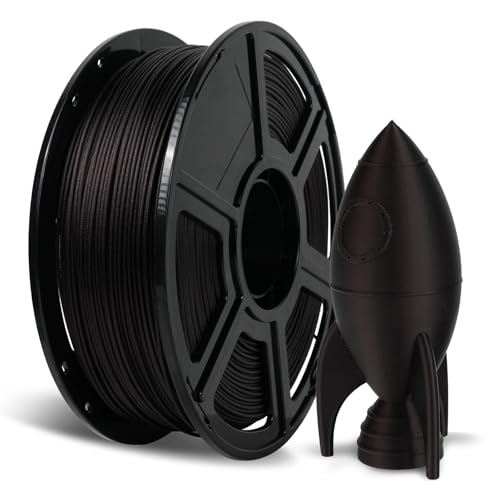
FLASHFORGE’s carbon fiber PETG blends bring notable strength and rigidity to PETG prints, along with improved wear resistance. PETG-CF combines PETG’s toughness with carbon fiber reinforcement, producing parts that resist deformation under load and show good heat resistance. This filament is a strong option for gears, brackets, and lightweight structural components that demand better performance than standard PETG while remaining relatively easy to print compared to some polycarbonate blends.
PRILINE Carbon Fiber Filament: Carbon Fiber PC Blend
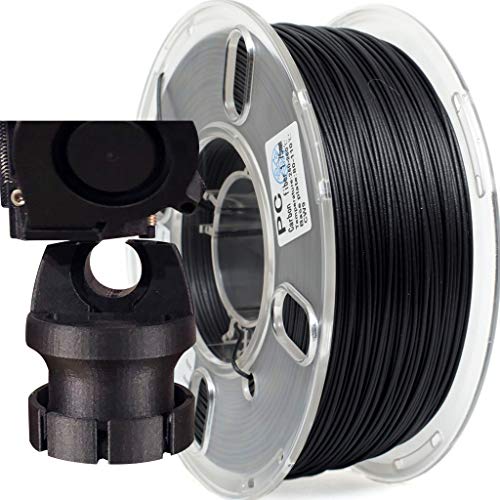
PRILINE carbon fiber filament blends carbon fiber with polycarbonate to deliver high strength and stiffness suitable for engineering-grade parts. It supports high-load applications and mechanical assemblies, though users should be prepared for longer tuning times and potential nozzle wear due to carbon fibers. The filament is 1.75 mm, with a focus on durability, weather resistance, and environmental friendliness, making it a strong option for durable functional parts and components that experience stress and temperature variation.
Buying Guide: Key Considerations For Strong Filaments
When selecting a filament for strength, consider the following factors to ensure you meet project requirements while maintaining print reliability:
- Material Type and Strength: ABS, PC-ABS, PLA+, and carbon-fiber reinforced blends each offer different trade-offs in strength, stiffness, and heat resistance. Match the material to the environment and mechanical demand (load, temperature, wear).
- Dimensional Stability: Filaments with tight diameter tolerances (e.g., +/- 0.02 mm) help maintain consistent extrusion and part accuracy, reducing failed prints and misfits in assemblies.
- Print Compatibility: Verify printer compatibility, nozzle temperature range, and bed adhesion requirements. Some strong materials may require enclosed chambers, higher bed temperatures, or specialized print surfaces.
- Post-Processing: PC-ABS and carbon fiber blends often respond well to painting and finishing, while others may require sanding or sealing to achieve desired surface quality.
- Ease of Use: PLA+ variants tend to be easier for beginners, while ABS and PC-ABS may demand more stringent control of warping and ventilation due to fumes.
- Cost and Availability: Carbon-fiber reinforced filaments generally cost more and may require nozzle wear monitoring. Weigh budget against the expected lifespan and performance benefits of the part.
- Spool Management: Neatly wound spools minimize tangling and feeding issues, supporting reliable prints over longer runs.
- Application Fit: For precision gears, housings, or load-bearing fixtures, select materials with high stiffness and impact resistance; for functional prototypes, balance strength with printability and finish.
Choosing the right filament involves aligning mechanical requirements with printability. Assess the part’s functional role, environmental exposure, and finish expectations to pick a material that delivers consistent strength without compromising print success. Each option listed above offers distinct advantages for strength-focused applications, ensuring you can select a filament that fits your project needs and printer setup.