Choosing the right commercial embroidery machine is essential for a small business aiming to grow with reliable speed, precise lettering, and versatile fabric handling. This guide highlights five leading machines that balance capacity with user-friendly features, including multi-needle setups, large embroidery areas, and advanced control systems. Each product is suitable for flat works, caps, T-shirts, and more, helping you scale production while maintaining quality. Review the summaries and product links to compare capabilities and determine which model aligns with your shop’s workflow and budget.
| Product | Needles | Embroidery Area | Max Speed | Key Benefit |
|---|---|---|---|---|
| Smartstitch S-1001 | 10 | 9.5″ x 14.2″ | 1200 SPM | |
| Smartstitch S-1501 | 15 | 14″ x 20″ | 1200 SPM | |
| BAi The Mirror | 15 | 20″ x 14″ | 1200 SPM (850 SPM on caps) | |
| Smartstitch S-1201 | 12 | 9.5″ x 12.6″ | 1200 SPM | |
| Poolin 15-Needle (Poolin) | 15 | 14″ x 20″ | 1200 SPM |
Below are detailed sections for five top picks. Each section includes a clickable Amazon link, a visual block, and a concise feature-based overview to help you compare at a glance.
Smartstitch S-1001 Upgraded Embroidery Machine

The S-1001 is an upgraded compact commercial embroidery machine designed for flat works, hats, and apparel. It features an auto thread trimming system, automatic color changes, and a self-lubrication mechanism to reduce maintenance time. Laser embroidery positioning and a user-friendly 7″ touch screen facilitate precise setup. It supports up to 100 million stitches in memory, offering room for long-term business use. The machine emphasizes a stable, quieter operation, which helps maintain a productive shop floor. Training materials and real-time remote assistance are available from Smartstitch.
Smartstitch S-1501 Commercial Embroidery Machine

The S-1501 offers a 15-needle setup and a generous 14″ x 20″ embroidery area, ideal for larger designs and cap work. It features a 12″ touch screen, high-speed operation up to 1200 SPM, and a 270-degree wide-angle cap system. The Smart Control System and automatic color changes streamline production, while a robust learning community helps new users ramp up quickly. Live demo appointments are available through the brand’s support network to assist decision-making before purchase.
BAi The Mirror Embroidery Machine

The Mirror model from BAi boasts 15 needles and a 20″ x 14″ embroidery area with a maximum speed of 1,200 SPM, and strong cap embroidery performance at 850 SPM. It includes an Institch I5 control system for easier operation, a broad accessories kit, and versatile capabilities for hats, T-shirts, jeans, jackets, and more. The machine is positioned as a high-productivity option, with a focus on rapid setup and stable performance for diverse materials.
Smartstitch S-1201 Compact Embroidery Machine

The S-1201 emphasizes a compact footprint (approx. 29″ x 23″ x 19″) with a 9.5″ x 12.6″ embroidery area and a 10″ LCD touchscreen. It provides a maximum speed of 1200 SPM and up to 100 million memory stitches. Laser positioning and automatic color change contribute to workflow efficiency, while training resources ensure a smooth onboarding process for beginners and transitioning shop owners alike.
FDZ Embroidery Machine with 12 Needles
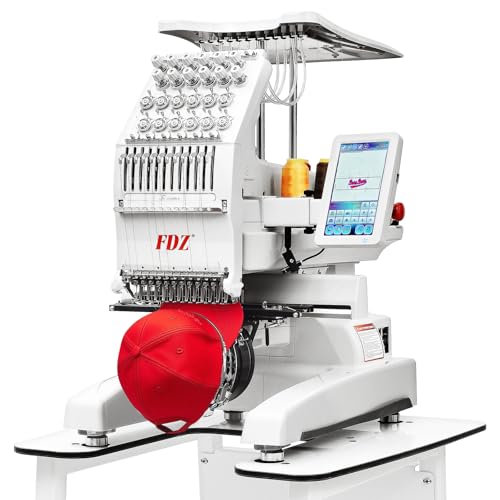
The FDZ 12-needle model focuses on a balance of 12 needles, a 9.45″ x 12.60″ embroidery area, and a 7″ touch screen. It supports 3D cap embroidery and capabilities for hats, T-shirts, and other apparel, with laser positioning and automatic color changes. The machine’s architecture emphasizes a practical stepping-stone for shop owners expanding beyond single-needle setups and looking for a more robust multi-needle option without overshooting their budget.
Buying Guide: Key Purchase Considerations for Small-Business Embroidery
Choosing the right machine involves evaluating several practical factors beyond feature lists. Consider the following perspectives to ensure a fit with your shop’s goals and workflow.
- Needle count and embroidery area: More needles and larger areas enable complex designs and larger runs. For cap work and diverse fabrics, prioritize models with wide cap systems and stable frames.
- Speed and memory: High SPM counts accelerate production; memory capacity supports large, intricate designs. Ensure the control system supports easy design management and quick color changes to minimize downtime.
- Ease of use and training: User-friendly interfaces, clear manuals, and community support reduce the learning curve. Look for vendors offering live demos, tutorials, and remote assistance.
- Maintenance and reliability: Self-lubrication, automated features (thread trimming, color changes), and robust frames contribute to lower maintenance and longer machine life.
- Connectivity and design workflow: WiFi or USB transfer, software compatibility, and the ability to import DST/DSB formats streamline design integration into production.
- Support and ecosystem: Availability of local technicians, training groups, and online communities can dramatically shorten onboarding and troubleshooting times.
- Footprint and shop layout: If space is limited, prioritize compact models with strong performance. Ensure the machine’s footprint aligns with your production area and workflow.
- Total cost of ownership: Price is only part of the equation. Consider warranty, maintenance costs, spare parts availability, and potential productivity gains over time.
When evaluating these five machines, reflect on your typical runs, target products (caps, shirts, jackets, etc.), and whether you plan to scale to higher volume. A live demo or trial run, if offered, can provide clarity about real-world performance and operator comfort. Establish a short list of core requirements—such as hat-cap capability, embroidery area needs, and color-change automation—and compare each model against that baseline to arrive at an informed decision.