What’s in this guide
Creating large-scale sculptures demands clays that balance workability, structural integrity, and long-term stability. The following selections are among the most suitable options for big pieces, ranging from traditional kiln-fired clays to pliable modeling compounds. Each product is chosen for size-friendly handling, performance in wheel throwing or hand building, and compatibility with common sculpture workflows. Compare features and choose the clay that best fits your project scale, preferred techniques, and storage needs.
| Product | Brand | Key Features |
|---|---|---|
| Pottery Clay: Best Mix- BMX Mid Fire Cone 5-7 | Rocky Mountain Clay | Smooth white mid fire clay; Great for wheel throwing or hand building; Non toxic; Gluten free |
| Monster Clay Premium Grade Modeling Clay (4.5lb) | The Monster Makers | 4.5lb tub; Medium consistency; Sulfur free; Oil/Wax based |
| Van Aken Plastalina Non-Hardening Modeling Clay 4.5 Lb. Sculpture Gray | Van Aken | Pigmented oil-based modeling compound; Smooth and vibrant color range; Never hardens |
| Sculpture House Roma Plastilina No.2 Med Grey-Green | Sculpture House | Roma Plastilina professional modeling clay; Gray-Green; Medium hardness |
| Activa Blackjack Earthenware Low Fire Clay, 10lb | Activa | Silky smooth consistency; Ideal for wheel throwing, sculpture, modeling; Suitable for beginners and pros |
Pottery Clay: Best Mix- BMX Mid Fire
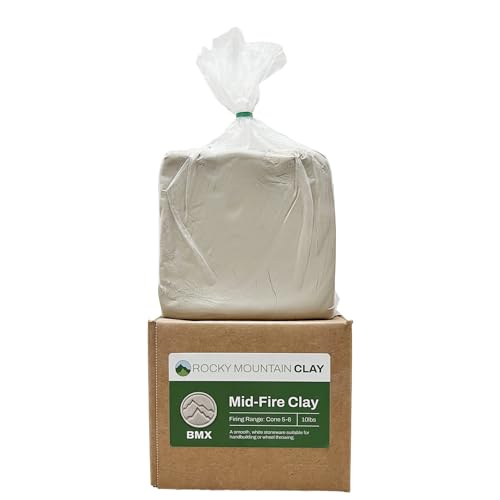
The Best Mix- BMX Mid Fire Cone 5-7 is a smooth white mid-fire clay designed for both wheel throwing and hand building. It offers strong plasticity, reliable drying behavior, and a forgiving surface ideal for larger sculpture surfaces. Its non-toxic, gluten-free formulation makes it a practical choice for studios handling varied projects without special precautions. For large pieces, the clay’s balance of workability and density helps maintain form during long sessions and reduces the risk of cracks during slow drying.
Monster Clay Premium Grade Modeling Clay

Monster Clay Premium Grade Modeling Clay is a sulfur-free, oil/wax-based modeling compound packaged in a 4.5 lb tub. Its medium consistency makes it suitable for large-scale sculpture modeling where the artist needs a clay that can be worked for extended periods without drying out too quickly. While not a traditional ceramic clay, it serves well for armatures, maquettes, or detailed large forms before final fabrication in another medium or firing process.
Van Aken Plastalina Non-Hardening Clay

Van Aken Plastalina is a pigmented oil-based modeling compound that remains pliable and plastic, never hardening. This makes it ideal for large, evolving sculptures where you want to build up forms and rework surfaces over time. The smooth consistency and a vibrant color range help distinguish different areas of a large model, and its non-hardening nature allows for iterative refinement without cracking or shrinking typical of fired clays.
Sculpture House Roma Plastilina No.2 Med Grey-Green

Roma Plastilina No.2 Med Grey-Green is a professional modeling clay noted for its medium hardness and smooth workability, making it a dependable choice for larger sculptural elements. It maintains pliability during long modeling sessions and is suitable for creating detailed textures on sizable forms. This material is especially helpful for artists who plan to cast or reproduce parts later in the production process.
Activa Blackjack Earthenware Low Fire Clay

Activa Blackjack is a low-fire earthenware clay designed for a natural blend of clays that yields silky smooth workability. It is suitable for wheel throwing and sculpture, offering a consistent texture that supports large-scale builds. The clay’s versatility makes it appropriate for beginners through professionals, providing reliable results in both hand-building and wheel-based sculpture workflows. It’s a practical choice when firing constraints or kiln availability influence project planning.
Buying Guide: Key Purchase Considerations
- Clay type and firing approach: Determine whether a traditional fired clay (stoneware, earthenware) or a non-hardening modeling clay best suits your workflow and final presentation. Large works often require strong internal support, so consider whether you’ll kiln-fire or leave as a non-fired sculpture.
- Workability and drying behavior: For big pieces, you want clays that balance plasticity with manageable drying rates to minimize cracking. Read product flexibilities and open time to gauge suitability for your session length.
- Texture and surface finish: Some clays offer smoother surfaces ideal for fine detailing, while others provide a rustic or matte finish. If planning a glaze or varnish, verify compatibility with the intended coating or sealant.
- Internal structure and stability: Large sculptures may benefit from clays with steady shrinkage and good cohesion. Consider adding armatures or supports when using clays that are prone to cracking.
- Environmental and handling considerations: Non-toxic, gluten-free, or sulfur-free options can be important in shared studios. Storage needs (refrigeration, humidity control) can also impact your selection.
- Cost and availability: Availability of bulk packs or 4–10 lb bundles affects long-term project planning. Compare prices per pound and storage ease when scaling up to large sculptures.
- Compatibility with tools and accessories: Ensure your chosen clay works well with your existing tools, sculpting knives, textures, and finishes such as sealants or paints.
- Future workflow options: If you anticipate casting or reproducing parts, consider whether the chosen material lends itself to mold making, sulfide-free modeling, or integration with other mediums.
These selections provide a spectrum of large-sculpture-friendly clays and modeling compounds, from traditional mid-fire ceramic clays to pliable, non-hardening modeling materials. When selecting a clay for big works, assess how the material behaves during long sessions, how it behaves while drying, and how it will interact with any eventual finishing steps or firing processes. By aligning the clay’s properties with your project’s scale and studio setup, you can optimize both production efficiency and final presentation.