What’s in this guide
Discover top alcohol inks that deliver brilliant color on glass and other non-porous surfaces. This guide highlights five high-performing sets, detailing color range, concentration, and usability to help you choose inks that yield sharp lines, smooth blends, and durable, fade-resistant results for glass art, resin projects, tumblers, and more.
Summary of Selected Products
| Product | Brand | Colors/Volume | Notable Features |
|---|---|---|---|
| Alcohol Ink Set – 24 Colors | Piccassio | 24 × 10ml bottles | New formula, fast-drying, glass friendly, includes user guide |
| Alcohol Ink Set – 15 Colors | Muloen | 15 × 0.35 oz | Ultra-concentrated, includes metallics, bottle opener |
| Alcohol Ink Set – 20 Colors | SigWong | 20 × 10ml | High concentration, non-UV resin use, wide color range |
| LET’S RESIN 48-Piece Set | LET’S RESIN | 48 × 10ml | Very broad color selection, great for depth and layering |
| Jacquard Piñata Alcohol Ink Set | Jacquard | 9 × 0.5 oz | Bright, fast-drying, versatile on glass and ceramic |
Piccassio Alcohol Ink Set – 24 Colors

The Piccassio 24-color set uses a new generation formula designed for resin art and glass projects. Each bottle contains 10ml with a narrow precision tip to control drops and lines, ideal for fine details on glass surfaces or resin inlays. These inks are highly concentrated, producing deep tones with a small drop. Use Blending Solution to increase transparency on non-porous surfaces, and note that the inks are fast-drying and permanent. A user guide and tips are included to help beginners and seasoned artists alike manage blending and layering on glass, metal, and paper substrates.
On glass or resin surfaces, Piccassio inks excel at layering and color depth. They’re designed to adhere well to non-porous materials and to blend smoothly without excessive feathering. For best results on glass, apply in light layers, then build color gradually, allowing each layer to set before adding more. The included tips and tricks help you achieve crisp edges or soft gradients depending on your technique. This set is well-suited for beginners seeking reliable color payoff and for experienced artists pursuing glass accents and resin-inlaid designs.
Muloen Alcohol Ink Set – 15 Colors

The Muloen set emphasizes high concentration for strong, saturated color. It includes 12 standard colors plus 3 metallics, offering red, blue, black, green, yellow, purple, pink, orange, rose, brown, plus two whites and metallics like silver and gold. The pigments are designed for resin work and glass, with a squeeze bottle design to control the dosage. A bottle opener is included to ease opening, and proper handling tips help prevent splashing and uneven application. This set supports depth creation by layering colors and adding white last to settle hues on non-porous surfaces.
For glass projects, Muloen inks deliver bold results with minimal color. The compact bottle design helps reduce waste, while the ability to dilute with alcohol or blending solution enables lighter shades and gradient transitions. Caution is advised to avoid over-thinning or overloading the resin curing process if used with resin systems. Beginners may appreciate the included gloves and practical bottle-opening tip for cleaner usage.
SigWong Alcohol Ink Set – 20 Colors

The SigWong set contains 20 vibrant alcohol inks designed for epoxy resin projects and glass. Each bottle holds 10ml, delivering strong pigmentation that can yield deep layering effects for resin coasters, petri dishes, and tumblers. Inks are described as highly concentrated, allowing a small amount to go a long way. The kit supports a wide array of non-UV resin uses and can be diluted with alcohol to achieve lighter shades or extended blends. It’s particularly suitable for artists seeking a broad color spectrum without sacrificing depth.
When applying these inks to glass, start with a light base and progressively add color, allowing alcohol to aid in spreading for smooth transitions. Metallic and pearlescent effects can be achieved by layering strategically, and using blending solution helps maintain transparency where desired. The range accommodates bold designs and subtle, translucent overlays, appealing to glass crafters and resin artists alike.
LET’S RESIN 48-Piece Concentrated Set

The LET’S RESIN 48-color set offers a broad palette designed for deep, vibrant results in epoxy resin and glass projects. With 48 bottles at 10ml each, the collection emphasizes high concentration for intense color. This set supports complex layering and depth creation, useful for resin art, petri dishes, tumblers, and other non-porous surfaces. The description highlights a wide range of colors, including many hues and metallics, enabling a variety of effects from sinking layers to luminous overlays. It’s well-suited for artists who prefer extensive color options in one package.
For glass applications, these inks can deliver striking patterns when paired with alcohol-based blending solutions. Since they are highly concentrated, apply sparingly, test on a scratch surface, and build up gradually. The included variety helps achieve both bold visuals and delicate washes, making the LET’S RESIN set a flexible choice for mixed-media glass projects and resin art alike.
Jacquard Piñata Alcohol Ink Set – 9 Colors
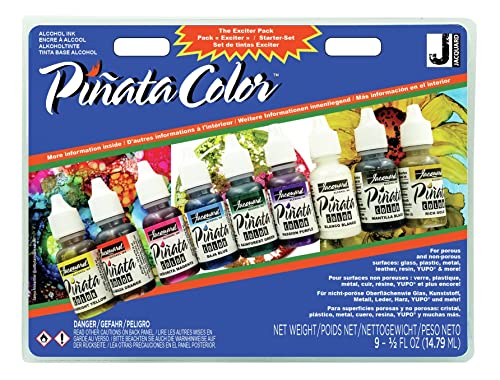
Jacquard Piñata colors are renowned for brightness and fast-drying performance. This Pinata pack includes nine highly saturated colors that are versatile across glass, epoxy resin, and ceramic surfaces. The inks are permanent and water-resistant once dry, making them reliable for projects that may encounter moisture. They are described as blendable and compatible with rubbing alcohol cleanup and Jacquard Clean Up Solution for efficient maintenance. Using a small amount goes a long way due to their strong pigmentation, which is ideal for high-contrast glass designs and quick resin accents.
Piñata inks work well for bold lines, stencils, and detailed glass work. The set’s range supports both solid fills and gradients when combined with blending solution. Artists can achieve vivid yellows, blues, and metallic accents with minimal product, while keeping surfaces non-porous-friendly attributes that suit glass projects and resin art alike.
Buying Guide: Key Considerations for Alcohol Inks on Glass
- Color concentration: Higher concentration inks deliver richer color with less product. For glass, start with light coats and build up to avoid bleeding and uneven drying.
- Surface suitability: Most inks here are designed for non-porous surfaces (glass, metal, resin). Check compatibility with resin systems and whether a suitable blending solution is recommended.
- Drying behavior: Fast-drying inks help with layered designs on glass but can be challenging for blending. Use blending solutions or slower-drying variants if needed for gradients.
- Color range: A broad palette supports both bold, saturated patterns and subtle washes. Metallics add depth and reflective accents on glass surfaces.
- Application tools: Precision bottles, squeeze tops, and included accessories like bottle openers influence control and safety. Consider inks that minimize splashes when working on delicate glass pieces.
- Maintenance and cleanup: Inks should be easy to clean from non-porous items. Rubbing alcohol or dedicated clean-up solutions are commonly recommended.
- Packaging and volume: Larger color ranges with 10ml bottles balance cost and usability. Ensure you have enough colors for your project scale without excessive waste.
- Safety: Use gloves if handling concentrated inks, and work in a well-ventilated area. Follow manufacturer instructions for curing and layering to prevent resin issues.
Choosing the right ink set depends on your project scope, preferred color range, and whether you plan to pair inks with resin or glass-only designs. For beginners, a 15–20 color kit with a mix of vibrant and metallic hues provides versatility without overwhelming complexity. Seasoned crafters may opt for broader sets (48 colors) to maximize depth and effects across diverse substrates. Always test on a scrap surface before committing to a final piece to understand drying times and color behavior on your chosen glass substrate.