What’s in this guide
New to 3D printing or drawing with a 3D pen? This guide highlights approachable projects and starter kits that help beginners practice fundamentals—control, creativity, and patience. The selected products offer guided templates, reusable patterns, and beginner-friendly components to jumpstart your 3D journey. Each item below includes simple steps, clear visuals, and practical tips for getting your first 3D creations off the page and into the real world.
Buying at a glance: The table below lists five beginner-friendly 3D print projects and supplies, showing what they’re best suited for, who they’re for, and the core benefits. Use it to compare options quickly as you plan your first projects.
| Product | Brand | Best For | Key Benefit |
|---|---|---|---|
| SONGTIY 3D Printing Drawing Book | SONGTIY | Kids and beginners | 40 patterns with a clear plate for easy tracing |
| SCRIB3D Advanced 3D Printing Pen | SCRIB3D | Creative doodling | Large LCD, adjustable temperature and speed |
| BambooSegD Jet Engine Model Kit | BambooSegD | DIY hardware assembly | Precision compatibility with metal parts |
| Dayker 3D Pen Drawing Book | Dayker | Beginner-friendly templates | 40 patterns, reusable PVC board |
| MYNT3D Professional 3D Pen | MYNT3D | Precision drawing | OLED display, adjustable temperature and feed |
SONGTIY 3D Printing Drawing Book
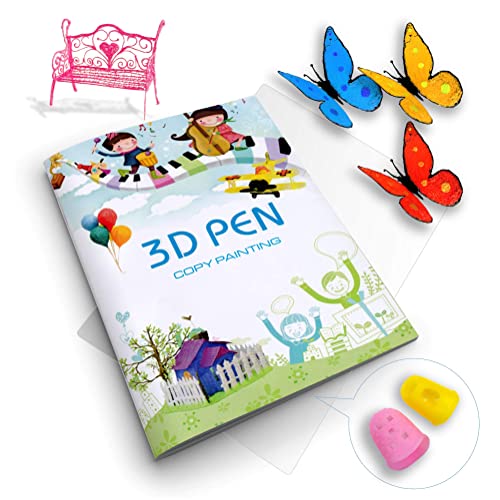
The SONGTIY drawing book provides a structured start for 3D printing pen projects. It includes 20 pages of 40 patterns and a clear plate to make tracing easier, which helps beginners learn timing and spacing without losing track of lines. The design is kid-friendly, making it a practical gift option for young creators exploring 3D art. As a beginner bundle, it emphasizes safe handling and simple assembly as patterns are cooled and shaped. A solid introduction to translating imagination into tangible pieces.
Main features include a compact storage-friendly book format, the reusable pattern concept, and a beginner-oriented approach to painting and shaping with a 3D pen. For families and classrooms, this kit can become a go-to starter set that fosters creativity while minimizing clutter and confusion.
SCRIB3D Advanced 3D Printing Pen
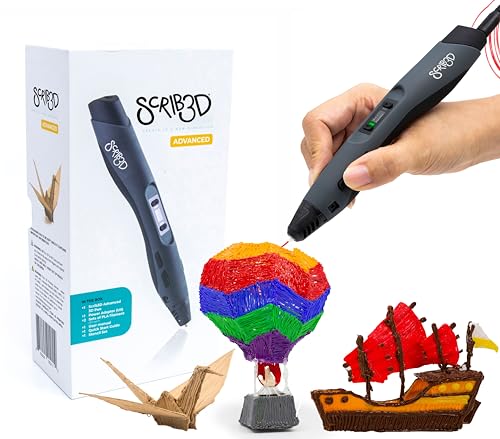
The SCRIB3D Advanced 3D Printing Pen is designed for more serious beginners who want better control. It features a large LCD screen, adjustable temperature and speed with eight speed options, and a soft-touch exterior for comfort during longer sessions. The kit includes two colors of PLA, a power adapter, a step-by-step manual, and a stencil guide, making it easy to start and learn quickly. This pen supports precise line work, which is ideal as you transition from basic sketches to three-dimensional structures.
With its ergonomic grip and modern controls, users can practice consistent flow and thickness, improving accuracy over time. The included stencil guide provides a path for learners to replicate shapes and build confidence through incremental challenges. The design supports a smooth learning curve from simple outlines to more complex forms.
BambooSegD Jet Engine Model Kit
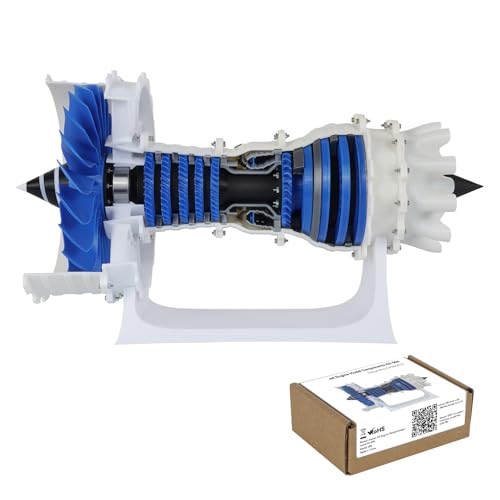
The BambooSegD Jet Engine Model Components Kit is ideal for hands-on learners who want to assemble a functional 3D-printed mechanism. It’s engineered for compatibility with Bambu Lab printers and includes upgraded metal bearings that reduce friction and ensure smoother operation. The kit relies on user-printed STL parts available in MakerWorld, and it suits both hobbyists and students who enjoy combining 3D printing with mechanical assembly. It’s a practical step up from simple templates into real-world engineering concepts.
Assembly is helped by including a hex key and clear guidance on suitable printing materials (PLA+ or PETG). While some parts require sourcing, the kit demonstrates how 3D-printed components can interlock with metal hardware for durable builds. This project highlights precise tolerances and the importance of calibration when moving to more complex assemblies.
Dayker 3D Pen Drawing Book
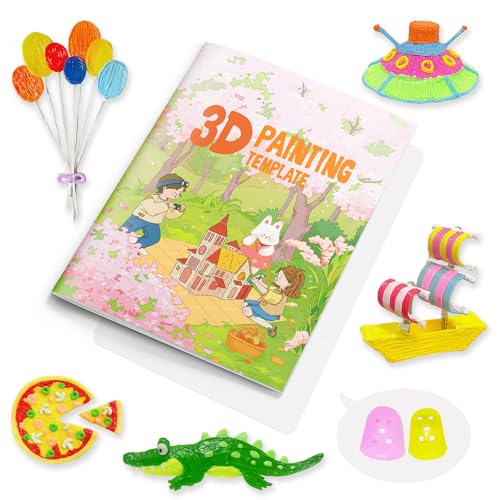
The Dayker 3D Pen Drawing Book offers 40 original designs tailored for 3D pen creators. This template set is designed to spark imagination and boost beginners’ confidence by providing easy-to-use, trace-and-build instructions. The PVC transparent board helps in accurate tracing, and the kit is pitched as an ideal gift for aspiring artists who want to explore 3D art without getting overwhelmed by complex patterns.
Key benefits include a clear, repeatable workflow: trace the pattern, apply the pen, let it cool, and assemble. The designs range from architecture to animals, ensuring broad appeal and ongoing engagement as skills progress. The format supports collaborative activities in classrooms or family projects, encouraging steady practice and skill development.
MYNT3D Professional 3D Pen
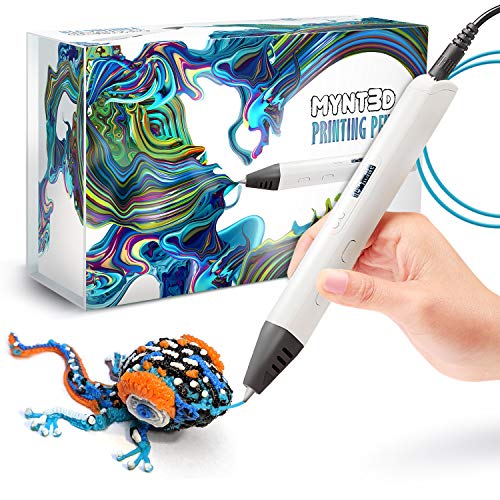
The MYNT3D Professional 3D Pen emphasizes precision and control. It offers adjustable feed to regulate speed and flow, and a temperature range from 140 to 230 C in one-degree increments. This enables careful tuning of material properties for various filaments, improving the consistency of lines and shapes. The pen is suitable for learners who want to refine detail work and create more sophisticated 3D projects as they gain experience. Its straightforward interface is designed to minimize frustration during early attempts at 3D drawing.
For beginners, the combination of adjustable temperature, precise speed control, and a responsive nozzle helps reduce common issues like blobs and over-extrusion. The device is well-suited for transitioning from simple doodles to more complex assemblies, such as layered structures and small sculpture pieces.
Buying Guide: How to Choose Your First 3D Print Projects for Beginners
When selecting beginner-friendly 3D print projects, consider your goals, available tools, and learning style. Here are key purchase considerations and perspectives to help you decide:
- Skill level alignment: Start with templates and drawing books that emphasize tracing and stepped assembly before attempting freeform designs.
- Ease of use: Look for kits with clear instructions, visual guides, and safety features, especially for kids or classrooms.
- Material compatibility: Choose pens and filaments that are easy to handle, such as PLA. Ensure your printer or pen is compatible with the included components.
- Learning curve: Gradually increase complexity by starting with patterned drawings and moving to mechanical kits or engine-model components as confidence grows.
- Safety and waste: Favor reusable templates and secure boards to minimize mess and burnout risk. Protective surfaces and supervision are advantageous for younger users.
- Expandability: Consider kits that offer additional patterns, stencil guides, or STL files to extend the learning journey beyond the initial five projects.
- Cost efficiency: Beginners benefit from multi-pattern books and comprehensive kits that reduce the need for extra purchases when practicing basic techniques.
- Project objectives: Decide whether your focus is on art, engineering, or mixed projects to pick the most suitable entry points (drawing templates vs. mechanical kits).
Across these options, the common thread is gradual skill-building: tracing, controlled deposition, cooling, and assembly. For classrooms or family use, combining a drawing book with a pen kit helps learners understand the relationship between pattern and structure. As comfort grows, users can experiment with different filaments, temperatures, and speeds to produce more complex models and designs.